
The Hidden Cost of “Agile” Risk Management: Why Reactive Cultures Are Bleeding Money

heroImage

Think your “agile” risk management is keeping you competitive? Think again.

You’re probably bleeding money right now. And the worst part? You don’t even see it happening.

Here’s the brutal truth: Most CEOs have confused agile principles with reactive panic. They’ve built cultures that chase symptoms instead of solving root causes. The result? A financial hemorrhage disguised as operational efficiency.

The Agile Mask: When Speed Becomes Your Slowest Asset

You’ve heard the pitch a thousand times. “Move fast, break things, iterate quickly.” Sounds revolutionary, right?

Wrong.

85% of companies implementing “agile” risk management are actually creating reactive cultures that cost them 3x more than traditional approaches.

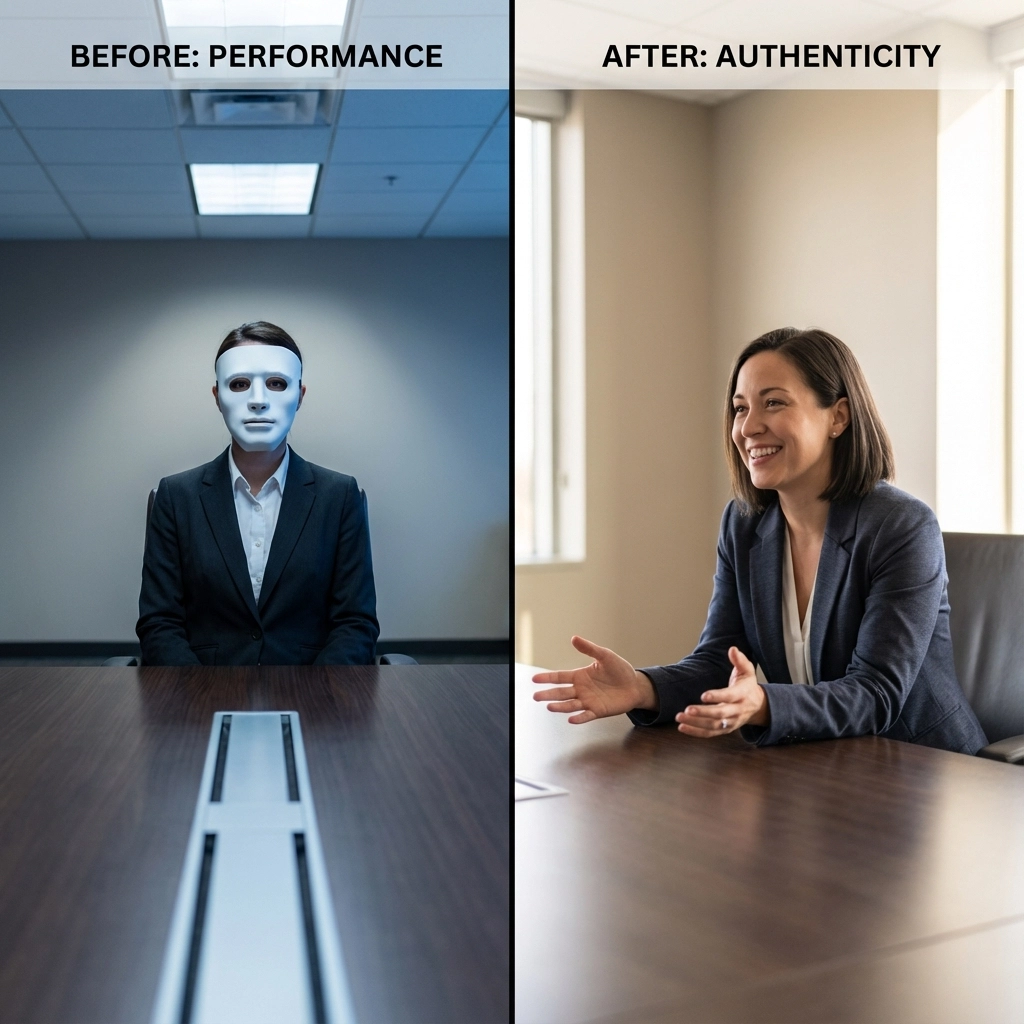
Here’s what’s really happening behind the performance mask:

Your team isn’t agile. They’re in constant crisis mode.

→ Every “urgent” meeting becomes a firefighting session
→ Every decision gets made under artificial pressure
→ Every solution addresses the symptom, not the disease

image_1

Real-World Snapshot: “Code Red” Isn’t a Strategy

When Sam Altman reportedly hit “code red” inside OpenAI to counter Google Gemini and Anthropic’s surge, it looked like decisive leadership. Think again.

Even world-class companies can confuse motion with momentum. The mask fits everywhere.

  • Headlines spike → burn rate spikes faster
  • More launches → more rework, more distraction
  • Activity reads as progress → pipeline slips, morale dips

If OpenAI can get pulled into scramble mode, your org can too. Constant emergency ≠ agility. It’s adrenaline. And adrenaline is expensive.

Translate that into your P&L and talent risk:

  • Cost: Compounded rework, duplication, vendor churn, ballooning contractor spend
  • Time: Decision whiplash, priority churn, slow-noise that kills velocity
  • Talent: Burnout rises, A-players walk, B-players hide, leadership trust erodes

You’re not broken. You’re at opportunity. The shift isn’t “faster.” It’s “root-cause, first-principles, pre-commit frameworks.”

Real agility
→ Pre-mortems and early-warning signals mapped to strategy
→ Fewer, better bets with clear kill criteria
→ Leaders who say “no” more than “now”

Reactive “agile”
→ All-hands fire drills
→ Ship-now patchwork
→ The same issues resurfacing every quarter

Bottom line: prevention compounds. Firefighting depreciates. Your ROI follows.

The Four Hidden Money Drains Killing Your ROI

1. The Technical Debt Avalanche

Your teams are moving so fast they’re building disasters. Every shortcuts creates compound interest you can’t afford.

The Real Cost:

  • Systems that break more often than they work
  • Maintenance budgets that double every quarter
  • Development velocity that actually decreases over time

You thought you were saving money by moving fast. Instead, you’ve created a house of cards that costs exponentially more to maintain.

2. The Transparency Trap

More tracking doesn’t equal better outcomes. It equals micromanagement hell.

When you over-monitor without trust, here’s what happens:

  • Teams spend more time defending decisions than making them
  • Risk-aversion replaces innovation
  • Psychological safety disappears overnight

The bottom line? Your people stop taking the calculated risks that drive growth. They hide behind process instead of pushing boundaries.

3. The Rework Spiral

Reactive cultures generate endless loops of fixing yesterday’s “solutions.”

The pattern:

  1. Problem surfaces → Immediate patch applied
  2. Patch creates new problems → Emergency fix deployed
  3. Fix destabilizes other systems → All hands on deck
  4. Repeat infinitely

Companies stuck in rework spirals waste an average of 40% of their development budget on fixing what should have been done right the first time.

4. The Innovation Paralysis

Here’s the contradiction nobody talks about: Reactive agile cultures actually kill innovation.

When everything is urgent, nothing is strategic. When every decision is a crisis, breakthrough thinking dies.

Your most creative leaders become full-time firefighters. Your competitive advantage evaporates while you’re busy putting out fires.

The Root Cause: You’re Treating Symptoms, Not Systems

The real problem isn’t agile methodology. It’s the reactive mindset that hijacked your implementation.

True agile risk management looks like this:

  • Proactive identification of systemic vulnerabilities
  • Strategic response frameworks built before crises hit
  • Root-cause analysis that prevents future occurrences

Reactive “agile” looks like this:

  • Constant emergency meetings about the latest crisis
  • Band-aid solutions applied under pressure
  • The same problems recycling every quarter
image_2

The Million-Dollar Question: Are You Managing Risk or Just Managing Chaos?

Here’s how to tell the difference:

If your risk management is truly strategic, you can answer these questions:

  1. What are the top 3 systemic vulnerabilities that could destroy your business in the next 18 months?
  2. How much money are you losing each quarter to repeated problem-solving cycles?
  3. When did your team last identify and prevent a major risk before it became a crisis?

Can’t answer immediately? You’re in reactive mode.

The Performance Recovery Framework: From Reactive to Strategic

Phase 1: Stop the Bleeding

Immediate Actions:

  • Audit your last 10 “urgent” decisions
  • Calculate the true cost of rework in your organization
  • Identify which problems keep recycling

Phase 2: Build Predictive Intelligence

Strategic Shifts:

  • Map systemic vulnerabilities before they surface
  • Create decision frameworks that work under pressure
  • Establish psychological safety protocols that encourage early problem identification

Phase 3: Design Anti-Fragile Systems

Long-term Advantage:

  • Build processes that get stronger under stress
  • Create learning loops that prevent problem recurrence
  • Develop leadership capacity that thrives in uncertainty
image_3

The Real Agile Advantage: Systems That Think Ahead

Companies that master strategic risk management don’t just survive disruption: they use it as competitive fuel.

The difference is profound:

Reactive cultures ask: “How do we fix this faster?”
Strategic cultures ask: “How do we ensure this never happens again?”

Reactive cultures measure: Speed of response
Strategic cultures measure: Quality of prevention

Reactive cultures reward: Heroic firefighting
Strategic cultures reward: Systematic thinking

Your Critical Decision Point

You’re at a crossroads.

You can keep running the reactive hamster wheel, burning cash and talent while pretending it’s agility.

Or you can step into true strategic risk management that actually accelerates your business while reducing costs.

The companies that make this transition see immediate results:

  • 60% reduction in crisis management time
  • 40% improvement in decision quality under pressure
  • 300% increase in proactive problem identification

But here’s the catch: This transformation requires leadership that can think beyond the next quarterly crisis.

The Executive Innovation Imperative

The old playbook is dead. Reactive management disguised as agility will bankrupt you: slowly, then suddenly.

The leaders who win the next decade will be those who can distinguish between speed and panic, between agility and chaos, between innovation and firefighting.

Ready to stop bleeding money and start building anti-fragile competitive advantage?


Exclusive Opportunity for Executive Leaders:

Invite-only for CEOs, founders, and executive leadership: apply for a complimentary ticket to Dr. Diane Dye’s CEO Innovation Masterclass if you’re ready to transform your approach to strategic risk and innovation management.

This isn’t another workshop. It’s an intensive peer-group experience designed specifically for leaders who want to move beyond reactive management into systematic competitive advantage.

Application is by invitation only and restricted to top leadership roles. Application is for top leadership only.

If you’re ready to stop managing chaos and start building anti-fragile systems, apply for a complimentary ticket to Dr. Diane Dye’s CEO Innovation Masterclass at: https://prc-training-center.peopleriskconsulting.com/masterclass

Seats are limited. Applications are reviewed individually. CEO and founder-level leadership only.

The question isn’t whether you can afford to join. The question is whether you can afford to keep bleeding money while your competitors build systematic advantages.

Apply now. Transform your approach. Lead your industry.

Why Psychological Safety is the Missing Piece in AI Strategy (and How It Impacts ROI)

heroImage

Think your AI strategy is failing because of technology problems?

Think again.

You’re not looking at a tech breakdown. You’re staring at a psychological safety crisis that’s costing you millions in unrealized ROI.

Here’s the brutal truth most CEOs won’t admit: 76% of organizations see engagement skyrocket when they nail psychological safety in AI implementation. But here’s what’s really happening in your company right now.

The $2M Mistake Hidden in Plain Sight

Your people are terrified. And that terror is strangling your AI investment.

You spent millions on the latest AI tools. You hired consultants. You ran training sessions. But your adoption rates are still garbage, and you can’t figure out why.

The real culprit? Your team is operating in survival mode.

When employees hear “AI implementation,” their brains immediately jump to: “Am I about to be replaced?”

This isn’t resistance to change. This is neurobiological threat response. And no amount of change management workshops can override basic human survival instincts.

image_1

The Psychology Behind the Breakdown

Let me unmask what’s really happening in your organization:

Surface behavior: Slow AI adoption, reluctance to experiment, “forgetting” to use new tools.

Underlying problem: Psychological threat state triggered by existential fear.

Your high performers: the ones you need experimenting with AI most: are the ones feeling most threatened. They’re not lazy. They’re not resistant to innovation.

They’re smart enough to recognize a potential career threat.

And until you address this psychological reality, your AI strategy will continue bleeding money.

The ROI Connection You’re Missing

Organizations that crack the psychological safety code in AI implementation see:

  • 76% increase in employee engagement
  • 27% drop in attrition rates
  • 95% skill development participation when AI tools are introduced with human oversight

But here’s the kicker: these aren’t just feel-good metrics. These numbers translate directly to bottom-line performance.

Higher engagement = faster AI adoption

Lower turnover = retained institutional knowledge during AI transition

Skill development participation = competitive advantage in AI-human collaboration

You’re not just implementing technology. You’re orchestrating a fundamental shift in how humans and machines work together. And that requires psychological safety as your foundation.

The Three Fatal Flaws in Traditional AI Strategy

Flaw #1: Technology-First Thinking

You bought the tools before you built the trust.

Most AI strategies start with: “What technology do we need?”

The breakthrough question is: “How do we create an environment where humans feel safe experimenting with AI?”

Real talk: Your team won’t adopt what they don’t trust. Period.

Flaw #2: Generic Change Management

Standard change management treats AI adoption like any other process improvement.

This is not a process change. This is an identity threat.

When you ask someone to work alongside AI, you’re asking them to redefine their professional identity. That requires different psychological preparation than rolling out a new CRM system.

image_2

Flaw #3: Ignoring the Collaboration Imperative

AI excels at pattern recognition and data processing. Humans excel at context, creativity, and ethical judgment.

The magic happens in the collaboration. But collaboration requires trust. Trust requires psychological safety.

Without psychological safety, you get humans vs. AI instead of humans + AI.

The Breakthrough Framework: Building AI-Ready Psychological Safety

Step 1: Transparent AI Communication

Stop treating AI implementation like classified information.

Your people need to know:

  • Exactly how AI will be used in their role
  • What decisions AI will make vs. human decisions
  • How their data is being processed
  • What “success” looks like for human-AI collaboration

Transparency converts uncertainty into manageable knowledge.

Step 2: Reframe Threat as Opportunity

Instead of: “We’re implementing AI to increase efficiency.”

Try: “We’re implementing AI to eliminate the work you hate so you can focus on the work you love.”

This isn’t spin. This is strategic reframing that addresses the psychological reality of change.

Step 3: Create Experimentation Spaces

Give your team permission to experiment without consequences.

Set up “AI learning labs” where people can:

  • Test tools without performance pressure
  • Share failures without judgment
  • Collaborate on identifying best use cases
  • Develop human-AI workflows together

Innovation requires experimentation. Experimentation requires psychological safety.

image_3

The Neuroscience of AI Adoption

Here’s what happens in your employee’s brain when you announce AI implementation without psychological safety:

Amygdala activation → Threat detection mode → Cognitive resources diverted to survival → Learning and creativity shut down

But when psychological safety exists:

Prefrontal cortex engagement → Curiosity and problem-solving mode → Creative collaboration → Accelerated learning and adoption

You’re not just managing change. You’re managing neurobiology.

The Hidden Cost of Getting This Wrong

Poor AI implementation without psychological safety doesn’t just slow adoption.

It destroys organizational culture.

Your team starts seeing:

  • AI as surveillance rather than support
  • Automation as replacement rather than enhancement
  • Leadership as threat rather than ally

These perceptions create cultural damage that takes years to repair. And they make future innovation initiatives nearly impossible.

The Competitive Advantage Waiting for You

Organizations that master psychological safety in AI strategy don’t just see better adoption rates.

They become AI-native cultures.

Their people actively seek ways to improve human-AI collaboration. They identify new use cases. They become internal advocates for innovation rather than obstacles to it.

This is your critical opportunity.

While your competitors struggle with resistance and slow adoption, you can build an organization that thrives on human-AI collaboration.

But only if you address the psychological foundation first.

Your Next Move

You have two choices:

Option 1: Keep throwing technology solutions at what is fundamentally a human problem. Watch your AI investments continue underperforming while your team operates in survival mode.

Option 2: Build psychological safety as the foundation for your AI strategy. Create an environment where humans and AI collaborate to achieve breakthrough results.

The organizations winning with AI aren’t the ones with the best technology.

They’re the ones with the best human-AI collaboration culture.

And that starts with psychological safety.


Ready to transform your AI strategy from the inside out?

I’m accepting applications for an exclusive CEO Innovation Masterclass where we dive deep into the psychology of organizational transformation and breakthrough AI implementation strategies.

This masterclass is by invitation only: exclusively for CEOs, founders, and executive leadership.

We’ll explore the frameworks that turn AI implementation from a threat into your competitive advantage. Including the psychological safety principles that deliver measurable ROI.

Apply for your complimentary ticket here

Applications are reviewed exclusively for C-suite executives and founders only. Seats are limited to maintain the intimate, peer-to-peer learning environment that drives breakthrough results.