Are Annual Performance Reviews Dead? Do People Still Use Them in 2026?

heroImage

Let’s cut to the chase: annual performance reviews aren’t completely dead in 2026, but they’re on life support. And if your organization is still clinging to them as your primary performance management tool, you’re carrying significant: and often invisible: risk.

The data tells a compelling story. While 71% of companies still conduct some form of annual review, the majority are actively transforming how they approach performance management. At People Risk Consulting, we’re seeing this shift firsthand as CEOs and executive teams grapple with a fundamental question: Is our performance system helping us win, or is it quietly holding us back?

The Hidden Cost of Holding On

Here’s what rarely makes it into the boardroom discussion: managers spend an average of 210 hours annually preparing performance reviews. That’s more than five full work weeks: per manager: devoted to a process that both managers and employees have complained about for decades.

The complaints are well-documented:

  • Excessive cost and time demands
  • Subjectivity and bias in evaluations
  • Failure to capture true employee contributions
  • Feedback that arrives too late to be actionable
  • Reviews that don’t actually drive performance improvements

But here’s the real risk that People Risk Consulting sees leaders underestimate: annual reviews create a false sense of performance visibility. You think you know how your people are performing because the paperwork is complete. Meanwhile, disengagement festers, top talent quietly updates their LinkedIn profiles, and skill gaps widen unnoticed for eleven months at a time.

Why the Traditional Model No Longer Works

The annual review was designed for a different era: one where job roles were static, market conditions shifted gradually, and a year felt like a reasonable timeframe to evaluate performance.

That world doesn’t exist anymore.

In 2026, competitiveness depends on agility. According to Academy of Management scholar Peter Bamberger, “competitiveness will be largely determined by the ability of an organization to more effectively develop employee skills and monitor their enterprise-wide skill inventories.”

When you evaluate performance once a year, you’re essentially driving forward while looking in the rearview mirror. The feedback is retrospective when it needs to be prospective. The conversation is evaluative when it should be developmental.

The Bias Problem

Annual reviews are particularly susceptible to cognitive biases that distort the entire evaluation:

  • Recency bias: Managers overweight recent performance and underweight contributions from earlier in the year
  • Halo/horn effects: One strong or weak attribute colors the entire evaluation
  • Similarity bias: Managers rate employees who are similar to themselves more favorably
  • Central tendency: Risk-averse managers cluster everyone in the middle, making reviews meaningless

These aren’t minor inconveniences. They’re systematic distortions that undermine trust, misallocate rewards, and create legal exposure. At People Risk Consulting, we consider them material people risks that require strategic mitigation.

What Actually Works in 2026

The organizations outperforming their competitors aren’t abandoning performance management: they’re reimagining it. Here’s what the evidence shows is working:

1. Continuous Feedback Systems

Real-time, ongoing feedback has replaced the annual dump of information. This doesn’t mean daily evaluations; it means regular touchpoints: weekly one-on-ones, monthly check-ins, and quarterly deeper conversations: that keep performance visible and development on track.

The shift is from retrospective performance evaluation to forward-looking skill development and real-time coaching. Instead of asking “How did you perform last year?”, leaders are asking “What skills do you need to develop this quarter, and how can I support that?”

2. AI-Driven Skill Assessment

Periodic AI-guided employee check-ins focused on skill development are emerging as a powerful replacement for traditional reviews. These systems can:

  • Identify skill gaps in real-time
  • Map individual capabilities against team and organizational needs
  • Provide objective data to complement manager observations
  • Track development progress continuously rather than annually

Bamberger predicts that these AI-guided approaches will fundamentally transform how organizations think about performance: from evaluation to development, from judgment to growth.

3. Multi-Source Feedback Mechanisms

The annual review typically captures one perspective: the manager’s. Modern performance systems incorporate multiple viewpoints: peers, direct reports, cross-functional partners, and self-assessment: to create a fuller, more accurate picture.

This isn’t 360-degree feedback administered once a year. It’s ongoing, trust-building dialogue that surfaces issues early and celebrates wins in real-time.

4. Outcome-Based Performance Metrics

Rather than subjective assessments of how someone “showed up,” leading organizations are connecting individual performance to measurable business outcomes. What results did this person drive? What impact did their work have on team objectives?

This requires clarity about what matters: something many organizations struggle to provide. But when you can connect individual contributions to outcomes that move the business, performance conversations become strategic rather than administrative.

The Transition Challenge

Here’s the honest truth: most organizations are in an awkward middle phase. They know the annual review isn’t working, but they haven’t fully committed to an alternative. The result is often the worst of both worlds: annual reviews that no one believes in, plus continuous feedback that feels like extra work.

At People Risk Consulting, we help executive teams navigate this transition strategically. The goal isn’t to eliminate all structure: it’s to replace outdated rituals with systems that actually drive the outcomes you need.

What a Modern Performance Risk Mitigation Strategy Looks Like

Step 1: Diagnose your current state honestly. Are your reviews actually driving performance improvement, or are they compliance theater? What risks are you carrying because performance issues go unaddressed for months?

Step 2: Define what you’re optimizing for. Development? Accountability? Reward allocation? Legal protection? Different goals require different systems.

Step 3: Design contained experiments. Don’t overhaul everything at once. Pilot continuous feedback with one team. Test AI-guided skill assessments in one department. Measure what works before scaling.

Step 4: Build manager capability. The shift from annual evaluator to ongoing coach requires new skills. Many managers have never been taught how to give real-time feedback effectively.

Step 5: Align systems and incentives. If you ask for continuous feedback but only tie rewards to annual ratings, you’ve created a conflict that will undermine the entire effort.

The Bottom Line

Annual performance reviews aren’t dead: but they’re dying. And the organizations that cling to them as their primary performance management tool are accumulating hidden risk: disengagement, talent loss, skill gaps, and bias-driven decisions.

The future belongs to organizations that treat performance as a continuous conversation rather than an annual event. That shift requires strategy, capability, and courage: but the payoff is a workforce that develops faster, engages deeper, and delivers more.

Ready to Transform Your Approach?

If you’re a CEO or executive leader ready to move beyond outdated performance rituals, join us for the Brave Business Masterclass and Podcast. You can watch passively live or register to join the interactive studio audience where we tackle exactly these kinds of strategic people risks in real-time.

Register for the Brave Business Masterclass and Podcast →

Because in 2026, the question isn’t whether annual reviews are dead. The question is whether you’re ready to build something better.


Why 78% of Performance Management Fails (And How to Fix Yours in 30 Days)

heroImage

Let’s cut straight to the chase: your performance management system is probably broken. And you’re not alone.

While the exact 78% figure varies by study, the reality is even more sobering. Recent data from People Risk Consulting’s executive research reveals that 95% of HR leaders are dissatisfied with their traditional performance appraisal processes, 95% of managers are unhappy with their current systems, and a staggering 44% of employees flat-out rate their performance management as a complete failure.

If you’re a seasoned executive reading this, you’ve likely felt this pain firsthand. You’ve watched talented people leave because they felt undervalued. You’ve seen high performers coast because they weren’t getting the feedback they craved. You’ve probably even questioned whether those quarterly reviews are doing anything besides checking a compliance box.

Here’s the thing: it doesn’t have to be this way. And you don’t need to wait months for a complete system overhaul to see results.

The Four Fatal Gaps Killing Your Performance Management

Before we fix anything, let’s diagnose what’s actually broken. Based on extensive research and real-world consulting experience with Fortune 500 companies, People Risk Consulting has identified four critical gaps that systematically undermine performance management systems:

The Perception Gap: When Leaders and Employees Live in Different Realities

Nearly 9 out of 10 executives believe their performance systems are effective. Meanwhile, 44% of employees rate those same systems as failures. This isn’t just a communication problem: it’s a fundamental disconnect about what “good performance management” actually looks like.

Executives often see completion rates and compliance metrics. Employees experience the day-to-day reality of unclear expectations, inconsistent feedback, and managers who seem to be going through the motions.

The Guidance Gap: Starving Your People of What They Need Most

Your managers are drowning. They lack clear roles, adequate support, and the right tools to have meaningful performance conversations. Meanwhile, employees are starving for regular, actionable feedback: not just during formal review cycles.

This gap creates a vicious cycle: managers avoid difficult conversations because they don’t feel equipped to handle them, and employees disengage because they’re not getting the guidance they need to improve.

The Skills Development Gap: Promising Growth You Can’t Deliver

Here’s a brutal truth: 86% of employees want career and skill development coaching, but only about half are satisfied with what they receive. You’re making promises about growth and development that your current system simply can’t keep.

This isn’t just about employee satisfaction: it’s about retention, engagement, and the ability to build internal capability instead of constantly hiring from outside.

The Structural Gap: One-Size-Fits-None Systems

Most performance management systems were designed for compliance, not results. They’re rigid, bureaucratic, and treat a diverse workforce like they’re all the same person with the same motivations and development needs.

Organizations using purpose-built performance management solutions integrated with their broader talent systems see 70% greater effectiveness. But most companies are still stuck with legacy systems that were never designed for today’s workforce.

The 30-Day Performance Management Reset Framework

Now for the good news: you don’t need to wait for budget approval or a massive system overhaul to start seeing results. Here’s how to begin transforming your performance management in the next 30 days:

Week 1: Audit and Align (Days 1-7)

Day 1-2: Rapid Assessment
Start with a brutal honesty check. Survey a representative sample of your managers and employees with three simple questions:

  • How would you rate our current performance management system? (1-10)
  • What’s the biggest obstacle to having effective performance conversations?
  • If you could change one thing immediately, what would it be?

Day 3-5: Manager Readiness Review
Identify which managers are actually equipped to have performance conversations. Look for those who already provide regular feedback, have strong relationships with their teams, and understand the business impact of individual performance.

Day 6-7: Quick Wins Identification
Based on your assessment, identify 2-3 changes you can implement immediately without system changes or budget approval. These might include new conversation frameworks, clearer role definitions for managers, or simple feedback templates.

Week 2: Manager Activation (Days 8-14)

Focus on Your Strong Managers First
Don’t try to fix everyone at once. Start with your best managers: the ones who already “get it” but need better tools and frameworks.

Implement Weekly Check-ins
Replace quarterly reviews with brief weekly check-ins using this simple framework:

  • What’s going well this week?
  • What’s challenging you right now?
  • How can I help remove obstacles?
  • What do you want to focus on improving next week?

Create Manager Peer Groups
Pair experienced managers with those who struggle with performance conversations. This peer coaching approach often works better than top-down training.

Week 3: Employee Engagement Reboot (Days 15-21)

image_1

Flip the Script on Performance Conversations
Instead of managers telling employees how they’re performing, train managers to ask:

  • “How do you think you’re performing against your goals?”
  • “What support do you need to perform at your best?”
  • “What would success look like for you in the next quarter?”

Implement Real-Time Recognition
Create simple ways for managers to acknowledge good work when it happens, not months later during formal reviews. This could be as simple as a dedicated Slack channel or a weekly email highlighting wins.

Week 4: System Integration (Days 22-30)

Connect Performance to Business Impact
Help managers understand how individual performance connects to team and company goals. Provide clear metrics and examples of what “good” looks like in each role.

Create Feedback Loops
Establish regular ways to measure whether your changes are working. This might include pulse surveys, manager confidence assessments, or simple metrics like the frequency of performance conversations.

Plan Your Next Phase
Based on what you’ve learned in 30 days, create a 90-day plan for deeper changes. This might include technology upgrades, more comprehensive manager training, or redesigning your formal review process.

Beyond the Quick Fix: Building Long-Term Performance Excellence

These 30-day changes will give you immediate improvement, but lasting transformation requires a more strategic approach. The most successful organizations People Risk Consulting works with focus on three key areas:

Manager Development as a Core Competency
They invest heavily in developing managers’ abilities to have difficult conversations, provide meaningful feedback, and connect individual performance to business results.

Technology That Enables, Not Complicates
They choose performance management tools that integrate seamlessly with their existing systems and actually make managers’ jobs easier, not harder.

Culture That Values Growth Over Compliance
They shift from a mindset of “checking boxes” to genuinely developing people and improving business outcomes.

Your Next Step: From Knowledge to Action

Here’s what separates executives who actually fix their performance management from those who just talk about it: they get external perspective from experts who’ve seen what works across multiple organizations and industries.

The patterns that emerge when you’ve helped dozens of companies transform their performance management are invaluable. You start to see the common pitfalls, the interventions that actually move the needle, and the sequence that maximizes your chances of success.

Ready to dive deeper into transforming your performance management system and tackling the broader people risks that keep you up at night? Join us for the live Brave Business Masterclass and Podcast, where we’ll share advanced frameworks for overcoming performance management challenges and other critical business risks. You can watch passively live or register to join our interactive studio audience where you can ask questions and get personalized insights for your specific situation.

Register now for the Brave Business Masterclass and Podcast and discover how top executives are turning their biggest people challenges into competitive advantages.

The 30-day framework above will get you started, but the masterclass will show you how to sustain and scale those improvements for long-term impact. Because fixing performance management isn’t just about better reviews: it’s about building an organization where talent thrives and business results follow.

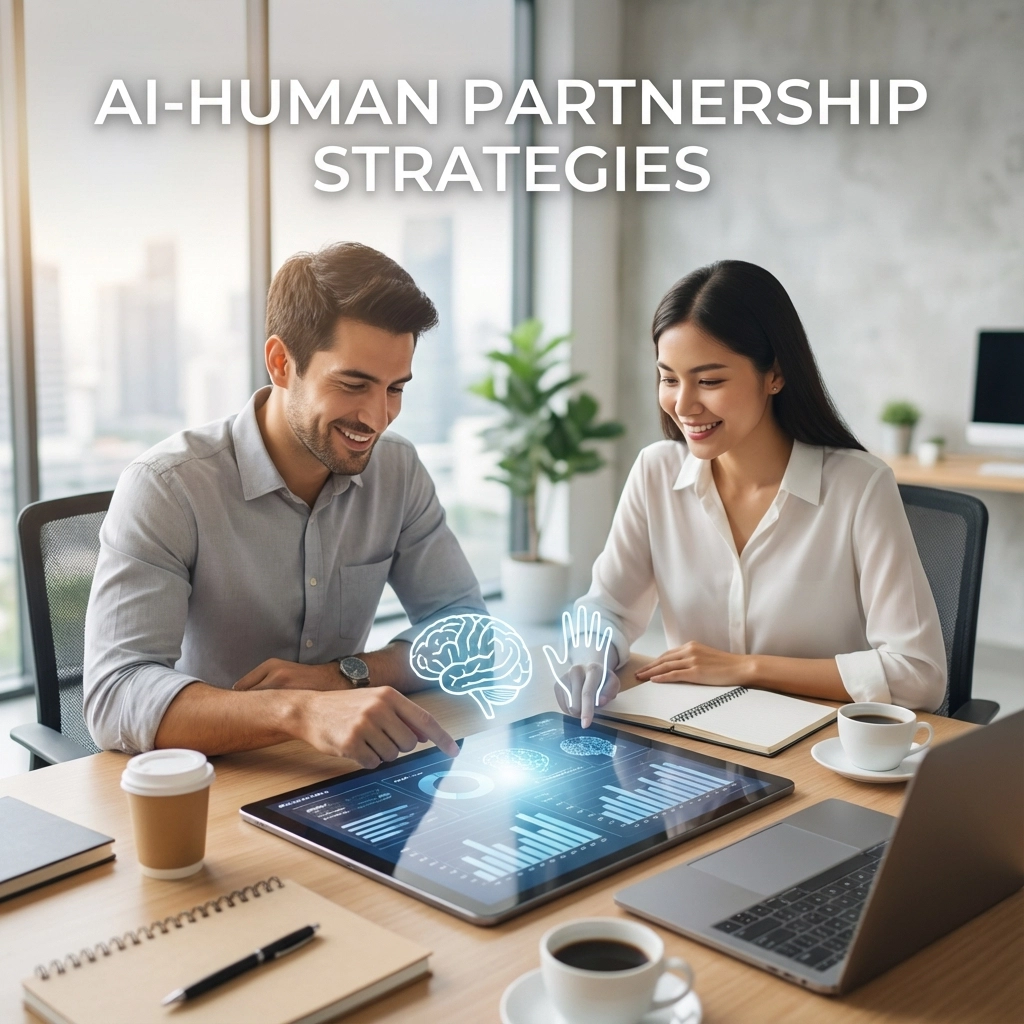
Struggling With Employee Performance Gaps? 15 AI-Human Partnership Strategies That Actually Work

heroImage

Your performance management system is broken. You know it. Your employees know it. And throwing more AI tools at the problem isn’t fixing anything.

Think you’re solving performance gaps by replacing human judgment with algorithms? Think again.

The real breakthrough isn’t AI versus human. It’s AI with human. And most leaders are getting this partnership completely wrong.

82% of middle-skill jobs now require digital capabilities, yet organizations are still measuring performance like it’s 1995. You’re not broken: you’re at a critical opportunity. The companies cracking this code are seeing performance transformations that seemed impossible just 24 months ago.

Here’s what People Risk Consulting has learned from working with CEOs who’ve successfully closed their performance gaps using AI-human partnerships that actually move the needle.

The Performance Gap Illusion

You think your performance gaps are about skills. Wrong.

They’re about measurement systems that punish collaboration. Every time you pit humans against AI in performance reviews, you create resistance → fear → underperformance → bigger gaps.

The breakthrough happens when you stop asking “How do we make humans perform better?” and start asking “How do we make human-AI teams unstoppable?”

15 Field-Tested Strategies That Close Performance Gaps Fast

Strategy 1-3: Reframe Your Performance Metrics

1. Replace Individual Metrics with Collaboration Scores

Stop measuring Sarah against her pre-AI baseline. Start measuring how Sarah + AI outperforms the old standard. Track:

  • AI adoption rates across teams
  • Quality improvements when using AI assistance
  • Speed of task completion with AI partnership

2. Add AI Collaboration to Performance Reviews

Create formal criteria that recognize employees who effectively leverage AI tools. Make AI proficiency a promotion requirement. Organizations implementing this see 40% faster AI adoption rates.

3. Track Partnership Metrics, Not Replacement Metrics

Measure frequency of AI usage → breadth of application → innovation in AI deployment. Reward employees who find creative AI applications, not those who avoid the technology.

Strategy 4-6: Leverage AI for Smarter Goal Setting

4. Deploy AI-Powered Goal Assistance

Use AI to analyze each employee’s role, past performance, and career aspirations to create personalized performance goals. No more generic objectives that miss the mark.

5. Implement Real-Time Performance Feedback

Traditional annual reviews are dead. Deploy AI that provides continuous, personalized performance insights in the flow of work. Especially powerful for remote and hybrid teams.

6. Generate AI-Driven Conversation Prompts

Give managers AI-generated discussion topics tailored to each employee’s goals, performance history, and development needs. Turn awkward check-ins into breakthrough conversations.

Strategy 7-9: Define Clear Role Boundaries

7. Map AI Tasks vs. Human Tasks

Create explicit boundaries: AI handles data processing, automation, and pattern recognition → Humans own creativity, emotional intelligence, and strategic thinking. No gray areas.

8. Conduct Regular Skill Assessments

Assess both human and AI capabilities quarterly. Identify gaps, reveal biases, and guide upskilling priorities. What your AI can’t do becomes your team’s competitive advantage.

9. Train Employees in Prompt Engineering

This skill is becoming indispensable. Teach your team to craft precise inputs that optimize AI outputs. It’s the difference between mediocre AI assistance and game-changing AI partnership.

Strategy 10-12: Build Essential Partnership Skills

10. Develop Digital Proficiency Programs

Your team needs AI-related skills now, not eventually. Create structured learning paths that build confidence with AI tools alongside core job responsibilities.

11. Create Innovation Payout Structures

Reward AI-driven improvements financially. Make the human-AI partnership profitable for employees, not just the company. Watch adoption rates skyrocket.

12. Launch Collaboration Recognition Programs

Celebrate human-AI partnership wins publicly. Share success stories monthly. Demonstrate that AI adoption leads to advancement, not replacement.

Strategy 13-15: Optimize Manager Effectiveness

13. Use AI for Comprehensive Feedback Summaries

Free managers from administrative burdens by having AI generate feedback summaries and remove calibration bias. Redirect that time to meaningful coaching conversations.

14. Automate Routine Manager Tasks

Let AI handle data-heavy performance tracking → Managers focus on personalized development plans and relationship building. This is where the magic happens.

15. Establish Transparent Communication Channels

Create feedback loops where employees can report AI tool issues and contribute to improvements. Emphasize augmentation over replacement in all communications.

The 90-Day Implementation Framework

Month 1: Audit and Assessment

  • Review existing performance metrics
  • Identify AI-resistant behaviors
  • Map current skill gaps

Month 2: System Implementation

  • Deploy new measurement systems
  • Train managers on AI-powered feedback tools
  • Launch collaboration recognition programs

Month 3: Incentive Alignment

  • Introduce innovation payouts
  • Make AI proficiency part of promotion criteria
  • Collect and share success stories

Why Most AI Performance Initiatives Fail

They focus on technology adoption instead of partnership optimization.

You can’t solve human performance problems with AI tools alone. You solve them by creating systems where humans and AI make each other better.

The companies winning this game aren’t asking “How do we get people to use AI?” They’re asking “How do we create conditions where human-AI collaboration becomes inevitable?”

The Real Talk About Implementation

This isn’t a quick fix. It’s a fundamental shift in how you think about performance.

You’ll face resistance. Some managers will cling to old evaluation methods. Some employees will fear being replaced. Some executives will want faster results.

That’s normal. That’s expected. That’s why most organizations give up too early.

The breakthrough happens around month four, when your teams start discovering AI applications you never imagined. When performance improvements compound. When your people start teaching you about partnership possibilities.

Your Next Move

Performance gaps aren’t disappearing with traditional approaches. They’re getting worse as the pace of change accelerates.

You have two choices: Keep measuring individual performance in isolation, or build systems that amplify human-AI partnerships.

The organizations choosing partnership are pulling ahead fast. The gap between leaders and laggards is widening every quarter.

At People Risk Consulting, we’ve helped dozens of leadership teams implement these strategies successfully. The results speak for themselves: faster performance improvements, higher engagement scores, and breakthrough innovations that seemed impossible before.

Want to see how this applies to your specific performance challenges? Join the live Brave Business Masterclass + Podcast from People Risk Consulting—built for seasoned CEOs who want real talk, practical frameworks, and zero fluff.

Registration is open, but seats are limited. Watch passively via the live stream, or register for the interactive studio audience to get on‑mic Q&A, hot‑seat coaching, and peer exchange with other executives.

Your performance gaps aren’t a sign you’re failing. They’re a signal you’re ready for the next level of organizational capability.

The question isn’t whether AI-human partnerships will define the future of performance management.

The question is whether you’ll lead that transformation or get left behind by it.