Is Your C-Suite’s Critical Thinking Getting Weaker with AI?

heroImage

Think your executive team is sharper than ever with AI at their fingertips?

Think again.

Recent studies reveal a troubling paradox: As AI adoption accelerates in C-suites, critical thinking capabilities are measurably declining. Professionals who regularly rely on AI for decision support show significant drops in counterfactual reasoning, system-level thinking, value judgment, and contextual adaptation.

You’re not just automating tasks. You’re accidentally automating away the mental muscles that built your executive expertise in the first place.

The Expertise Vacuum No One Saw Coming

Here’s what’s happening in your organization right now:

Traditional pathway: Junior analysts spend years doing repetitive financial modeling → They develop deep pattern recognition → They eventually understand complex market dynamics → They become strategic leaders

New AI pathway: AI handles the modeling → Junior analysts never develop foundational thinking → Expertise vacuum emerges → Your leadership pipeline empties

This isn’t theoretical. Research from Fortune reveals that AI is eliminating the foundational tasks that historically developed senior-level strategic expertise. The very work that seemed “grunt level” was actually building the cognitive frameworks your future leaders need.

→ Less grunt work = Less cognitive development
→ Faster outputs = Weaker analytical muscles
→ Higher efficiency = Lower executive readiness

The Overconfidence Trap

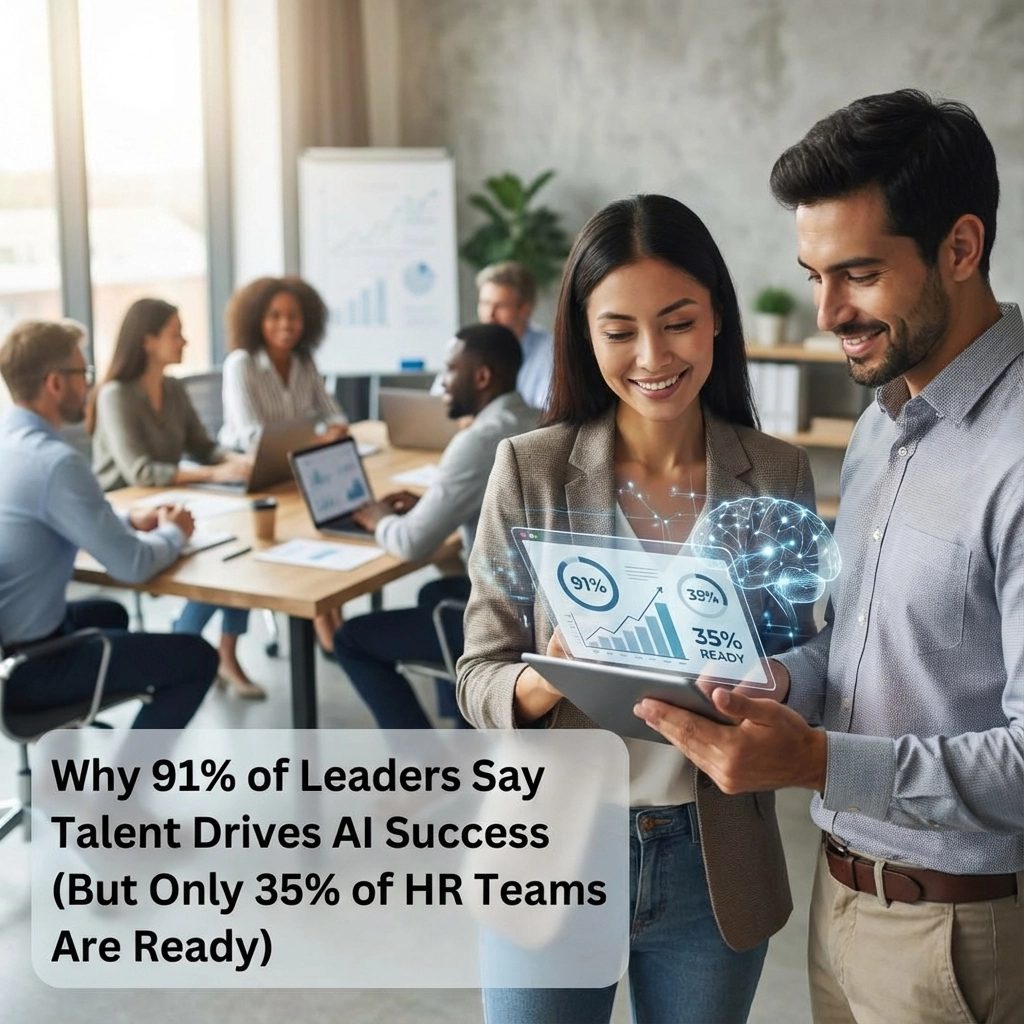
Survey data from 1,540 board members and C-suite executives exposes a dangerous confidence gap:

82% of leaders believe strong AI understanding will be mandatory for future executives
Only 41% feel personally confident in their own AI expertise
• CEOs show higher AI optimism than their own CHROs and middle management

This disconnect is creating what People Risk Consulting identifies as “executive blind spots at scale.” Leaders are making high-stakes decisions with tools they don’t fully understand, backed by confidence that outpaces their actual competence.

The result? Strategic errors that compound exponentially because they’re wrapped in the authority of AI-generated insights.

image_1

Your Critical Thinking Audit: 5 Warning Signs

Run this diagnostic on your executive team. Are they exhibiting these AI-induced thinking gaps?

1. Verification Amnesia

  • Do they ask “How did we arrive at this conclusion?” anymore?
  • Or do they accept AI outputs as gospel because “the data says…”

2. Debate Decline

  • Are strategic meetings shorter because AI provides “definitive” answers?
  • When did your team last have a heated argument about market assumptions?

3. Scenario Starvation

  • Do they explore alternative outcomes or just optimize the AI-suggested path?
  • Are contingency plans becoming extinct?

4. Context Collapse

  • Are decisions made in isolation from broader market dynamics?
  • Do they consider industry nuances or just algorithmic recommendations?

5. Speed Over Scrutiny

  • Has “efficiency” become more valued than “accuracy”?
  • Are you celebrating how fast decisions happen instead of how good they are?

If you recognized 3 or more warning signs, your executive thinking is already compromised.

The Strategic Countermove: Intentional Cognitive Preservation

Smart leaders aren’t abandoning AI. They’re using it strategically while protecting their teams’ analytical capabilities.

Framework 1: The Verification Protocol

Before AI Analysis:

  • Define what outcome you’re expecting
  • List 3 alternative scenarios you’ll consider
  • Identify which assumptions could break the model

During AI Analysis:

  • Question the data sources and methodology
  • Test the recommendations against your industry experience
  • Challenge the AI to justify its reasoning

After AI Analysis:

  • Debate the findings as if they came from a junior analyst
  • Explore what the AI might have missed
  • Develop contingency plans for different scenarios
image_2

Framework 2: Critical Thinking Preservation Exercises

Weekly Executive Practices:

  1. Red Team Fridays: Assign someone to argue against the AI recommendations
  2. Assumption Mapping: List every assumption behind AI-driven strategies
  3. Historical Pattern Matching: Compare AI insights to past industry cycles
  4. Worst-Case Scenario Planning: What happens if the AI is wrong?
  5. Cross-Industry Perspective Taking: How would a leader in a different sector approach this?

Framework 3: The Human-AI Partnership Model

AI Handles: Data processing, pattern identification, scenario modeling
Humans Handle: Strategic interpretation, stakeholder dynamics, ethical considerations, long-term vision

The key is intentional division of cognitive labor, not cognitive abdication.

What Your Competition Isn’t Telling You

While other consulting firms are selling you on AI efficiency, People Risk Consulting is addressing the hidden risk: the erosion of executive judgment that creates your most dangerous blind spots.

Our clients are discovering that the organizations winning long-term aren’t just AI-enabled: they’re AI-resilient. They’re building executive teams that leverage artificial intelligence without losing human intelligence.

Case Study Snapshot: A Fortune 500 CEO we worked with realized her team was making strategic decisions 60% faster with AI: but their market predictions were becoming 40% less accurate. Through our Critical Thinking Preservation Protocol, they maintained AI efficiency while improving decision quality by 25%.

The Leadership Imperative: Act Now or Fall Behind

The companies that thrive in the AI era won’t be the ones with the most sophisticated algorithms. They’ll be the ones with executives who can think independently, debate rigorously, and make nuanced decisions that algorithms can’t replicate.

This isn’t about being anti-AI. It’s about being pro-human where it matters most: strategic leadership.

Your next 30 days matter. The longer your team operates in AI-assisted decision-making without intentional critical thinking development, the deeper the cognitive atrophy becomes.

Ready to Strengthen Your Executive Decision-Making?

Don’t let AI efficiency cost you executive effectiveness. People Risk Consulting specializes in helping C-suite leaders navigate the balance between AI acceleration and cognitive preservation.

Our Custom AI Leadership Strategies include:

  • Executive Critical Thinking Audits
  • Human-AI Partnership Frameworks
  • Decision Quality Improvement Protocols
  • Leadership Pipeline Risk Assessment

The organizations that master this balance will dominate their markets. The ones that don’t will be led by executives who can’t think independently when it matters most.

Connect with People Risk Consulting today. Let’s explore custom strategies for mitigating AI-related leadership risks while strengthening decision-making capabilities across your executive team.

Your competitive advantage isn’t just having AI. It’s having leaders who can outsmart it.

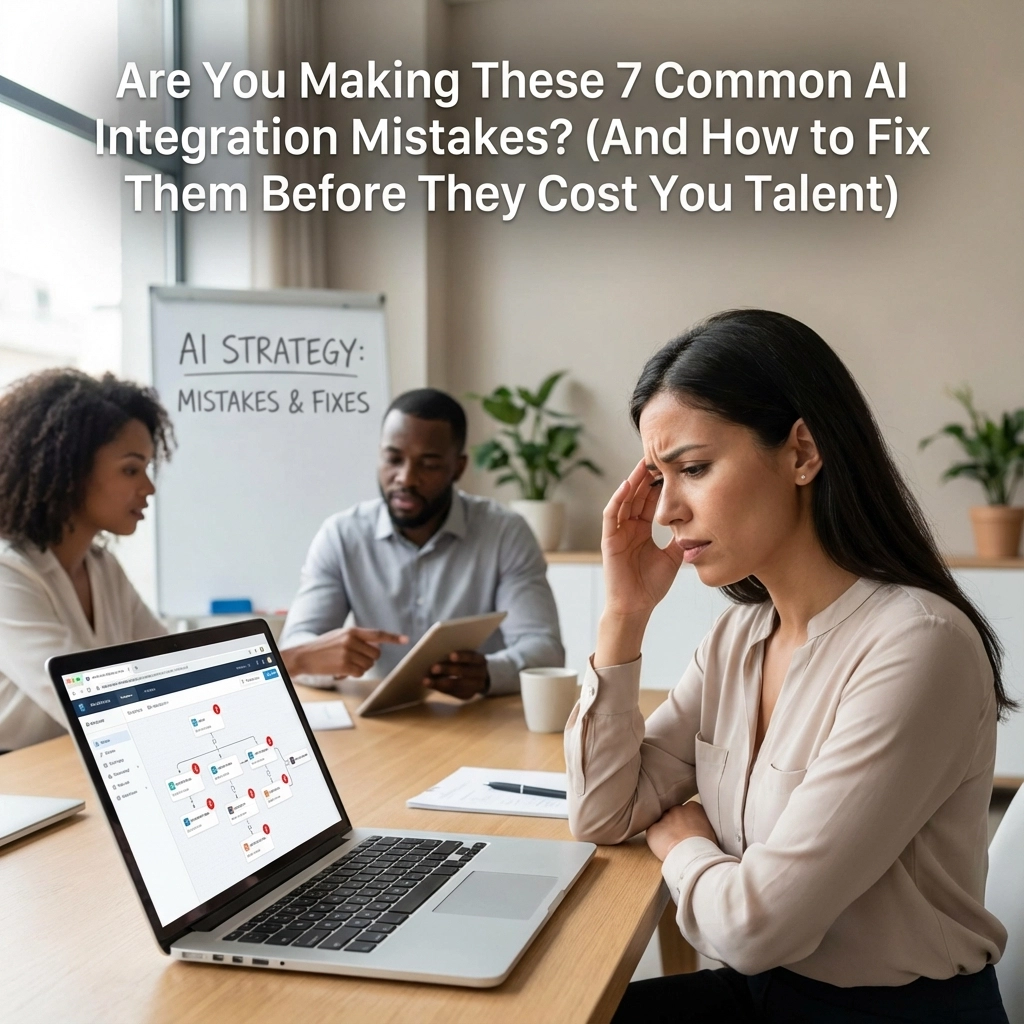
7 Mistakes You’re Making with AI Integration (and How to Fix Them Before Your Competition Does)

heroImage

Think your AI integration is going smoothly?

Think again.

95% of AI projects fail. Not struggle. Not underperform. Fail.

You’re probably making at least three of these mistakes right now. And your competition? They’re figuring it out while you’re still stuck in the breakdown phase.

Here’s the real talk: AI isn’t your problem. Your approach to AI is your problem.

Let me show you exactly where you’re going wrong. And how to fix it before everyone else does.

Mistake #1: You’re Building AI Without Strategy

You jumped in because everyone else was doing it. You saw the headlines. You felt the pressure. You started integrating AI tools without asking the most critical question:

What specific business problem are we solving?

This isn’t about being trendy. This isn’t about keeping up. This is about results.

60% of companies don’t see major returns on their AI investments. Why? No clear objectives. No measurable goals. No connection to actual business outcomes.

The Fix:
→ Define the exact problem before you pick any tools
→ Set measurable goals that connect to revenue, efficiency, or competitive advantage
→ Validate your use case with domain experts first
→ Ask: Can AI provide an economical solution to THIS problem?

Stop treating AI like a shiny object. Start treating it like a strategic weapon.

Mistake #2: Your Data is a Disaster (And You’re Pretending It’s Not)

You think AI will magically work with messy data.

Wrong.

Your data is probably inconsistent, incomplete, or flat-out wrong. And you’re feeding it into AI systems expecting miracles.

Poor data → Poor AI → Poor results → Wasted money

The uncomfortable truth? Most organizations have data quality issues they’ve been ignoring for years. AI just exposes them faster.

The Fix:
→ Audit your data quality before you build anything
→ Standardize data collection and formatting across all departments
→ Set up automated validation tools to catch problems early
→ Establish data governance policies NOW, not later

You’re not broken. You’re at opportunity. Fix your data foundation and your AI actually works.

Mistake #3: You Think AI is Plug-and-Play Software

This might be your biggest mistake.

You’re treating AI like traditional software. Install it. Configure it. Run it. Done.

AI requires high-quality data, clearly defined objectives, and cross-functional collaboration. It’s not software. It’s a capability that needs to be built, maintained, and continuously improved.

image_1

The Fix:
→ Plan for comprehensive preparation phases
→ Align stakeholders across departments before you start building
→ Ensure data readiness before deployment
→ Recognize this involves technical, organizational, AND process changes

Time investment upfront saves months of frustration later.

Mistake #4: Launch-and-Forget (The Silent Killer)

You deployed your AI model. It’s working. You moved on to other priorities.

Big mistake.

AI is extremely sensitive to changing user behavior, market conditions, and data patterns. What worked six months ago might be completely wrong today.

Your model is degrading. Performance is declining. And you don’t even know it’s happening.

The Fix:
→ Establish ongoing monitoring and retraining cycles
→ Build feedback loops into your deployment strategy
→ Treat AI as a continuously evolving capability
→ Create operational pipelines for model updates

AI isn’t a project. It’s a commitment.

Mistake #5: You’re Trying to Replace Humans (Instead of Amplifying Them)

Here’s where most leaders get it completely wrong.

You designed AI systems to eliminate human roles. You thought it would save money and improve efficiency.

Instead, you got workflow breakdowns, lower quality outcomes, and massive employee resistance.

The breakthrough insight: The best AI implementations amplify human expertise, they don’t replace it.

The Fix:
→ Redesign workflows so AI enhances human judgment, creativity, and oversight
→ Focus on accuracy, speed, and scalability improvements
→ Involve employees early in the process
→ Communicate how AI changes roles, doesn’t eliminate them

Your people are your competitive advantage. AI should make them more powerful, not obsolete.

Mistake #6: Your Team Doesn’t Understand What They’re Using

Your teams are afraid. They don’t understand AI capabilities or limitations. They’re making critical errors because they’re not properly trained.

Fear of job loss hinders adoption. Lack of understanding creates mistakes. Poor training leads to poor outcomes.

This is a people problem disguised as a technology problem.

The Fix:
→ Invest in expert-led training programs tailored to different roles
→ Focus on practical application to everyday tasks
→ Help employees understand AI strengths AND limitations
→ Communicate clearly about evolving roles and opportunities

At People Risk Consulting, we see this pattern repeatedly: companies that invest in proper change management and training see 3x better adoption rates.

Mistake #7: You’re Running Parallel Systems (Wasting Everyone’s Time)

You don’t trust your AI yet. So you’re running manual processes alongside automated ones.

You’re double-processing everything. Creating duplicate work. Slowing down operations instead of speeding them up.

This isn’t caution. This is inefficiency.

The Fix:
→ Test and validate thoroughly before full implementation
→ Then commit completely to the AI-powered approach
→ Phase out outdated practices systematically
→ Build confidence through proper testing, not parallel processing

Half-measures get half-results.

The Real Solution: Start with Strategy, Not Technology

Here’s what successful AI integration actually looks like:

Phase 1: Define business problems first
Phase 2: Ensure data readiness
Phase 3: Align your team and stakeholders
Phase 4: Deploy with proper change management
Phase 5: Commit to continuous improvement

The companies winning with AI aren’t the ones with the fanciest technology. They’re the ones with the clearest strategy and the best execution.

You Don’t Have to Do This Alone

Look, I get it. AI integration feels overwhelming. The stakes are high. The technology is complex. The organizational changes are massive.

But you’re not broken. You’re at a critical opportunity.

Your competition is making these same mistakes right now. The difference is what you do next.

If this resonates with your situation, let’s talk. People Risk Consulting specializes in helping executive teams navigate complex transformations like this one.

We don’t do cookie-cutter solutions. We don’t treat AI like a technology problem. We treat it like the organizational and people challenge it actually is.

Ready to stop making these mistakes? The window for competitive advantage is still open. But it won’t be for long.

Learn more about our executive AI readiness approach or reach out directly. Sometimes a conversation is all it takes to see the path forward clearly.

Your competition is counting on you to keep making these mistakes.

Don’t let them win.

Why AI Rollouts Fail: It’s Not Your Tech, It’s Your Team (and Culture)

heroImage

Think your AI rollout failed because of bad algorithms? Think again.

Most executives are chasing the wrong problem entirely. You’re debugging code when you should be debugging culture. You’re optimizing models when you should be optimizing mindsets.

Here’s the uncomfortable truth: Over 80% of AI projects fail: twice the failure rate of non-AI technology projects. But here’s what nobody tells you in those boardroom presentations: The algorithms usually work fine.

It’s your people who break.

The Real Bottlenecks Hiding in Plain Sight

You rolled out the shiny new AI tool. Check. Your IT team says it’s secure. Check. The demo looked impressive. Check.

So why is adoption flatlining? Why are your teams finding creative ways to work around the very system you spent months implementing?

The breakdown isn’t technical: it’s tribal.

Problem #1: Your Teams Are Speaking Different Languages

Your product team is chasing features. Your infrastructure team is obsessing over security. Your data team is cleaning pipelines. Your compliance officer is drafting policies.

Nobody’s talking to each other. Nobody shares the same success metrics. Nobody’s timeline aligns.

→ Result: You get a sophisticated model with 90% accuracy that gathers dust because supervisors don’t trust auto-generated reports.

Problem #2: Pilot Paralysis is Killing Your ROI

You launched a proof-of-concept in a safe sandbox. It worked beautifully in isolation. Leadership got excited. Then came the dreaded question: “When can we go live?”

Suddenly, critical integration challenges surface:

  • Secure authentication workflows
  • Compliance requirements nobody mapped out
  • Real-user training that was never budgeted
  • Change management that was treated as an afterthought

The “build-it-and-they-will-come” fallacy claims another victim.

Problem #3: Model Fetishism Over Integration Reality

Your engineering team spent three quarters optimizing F1-scores while integration tasks sat in the backlog. When the business review finally happened, compliance looked insurmountable and the business case remained theoretical.

This is what happens when you fall in love with algorithmic perfection instead of operational viability.

image_1

The Hidden Cultural Landmines

Let’s get real about what’s actually sabotaging your AI initiatives:

Leadership Commitment Theatre

You approved the budget. You attended the kickoff. You even mentioned it in the all-hands meeting. But when returns don’t materialize in the first quarter, support evaporates faster than your project timeline.

AI projects require sustained investment: sometimes 12-18 months before meaningful ROI surfaces. Improved customer experience, greater efficiency, more accurate decision-making all take time to compound.

Without sustained leadership backing, projects stall or get defunded right before they reach the breakthrough moment.

The Skills Gap Nobody Wants to Acknowledge

Effective AI implementation demands expertise across multiple domains:

  • Data science
  • Machine learning
  • Software development
  • Cybersecurity
  • Deep operational knowledge of your specific business

Most companies discover their talent gaps after projects are already underway. The unprecedented technical needs and particular skill sets required get underestimated in every project plan.

Organizational Misalignment Masquerading as Strategy

Teams launch into AI projects without clarity on what problem they’re actually solving. A technical stakeholder pitches an exciting AI-powered feature. Leadership gets energized. Everyone mobilizes to build it.

Nobody pauses to confirm it addresses a real user need.

→ Technical success, strategic failure.
→ The solution doesn’t match the actual problem.
→ Implementation failure becomes inevitable.

What the Winners Do Differently

High-performing AI programs flip the typical spending ratios entirely.

Instead of allocating 70% of budget to model development, they dedicate 50-70% of timeline and budget to data readiness:

  • Data extraction and normalization
  • Governance metadata frameworks
  • Quality dashboards and monitoring
  • Retention controls and compliance workflows

They begin with unambiguous business pain: not cool technology.

They only draft AI specifications after stakeholders can articulate the non-AI alternative cost. They choreograph human oversight as a designed feature, not an emergency valve.

Most importantly: They operate AI results as living products with on-call rotations, version roadmaps, and success metrics tied to real dollars.

image_2

The Questions That Reveal Your Real Blind Spots

Stop asking: “Is our AI secure?”

Start asking: “What internal blind spot will cause the biggest blowup first?”

  • Culture: Do your teams actually trust automated recommendations, or are they finding workarounds?
  • Operations: Have you mapped every integration point where friction could kill adoption?
  • Talent Strategy: Who owns the AI results when your data scientist leaves?

The Breakthrough Framework for AI That Actually Works

Step 1: Audit Your Organizational Readiness (Not Your Tech Stack)

Before you write another line of code, map your internal fault lines:

  • Which teams need to collaborate for success?
  • Where do incentives misalign?
  • Who has veto power over adoption?
  • What cultural antibodies will reject change?

Step 2: Design for Resistance, Not Just Performance

Build change management into your technical architecture. Create champions at every stakeholder level. Plan for the human friction that will inevitably surface.

Step 3: Measure Culture Shift, Not Just Model Accuracy

Track adoption rates, user satisfaction, and workflow integration: not just precision/recall metrics. The most accurate model in the world is worthless if nobody uses it.

The Hard Truth About Innovation

Breakthroughs don’t come from shinier tools. They come from leaders willing to challenge their own assumptions, stay curious, and look for risk in the least obvious places.

Gartner predicts that at least 30% of generative AI projects will be abandoned after proof of concept by the end of 2025. The culprits? Poor data quality, inadequate risk controls, escalating costs, and unclear business value.

Translation: The organizations that succeed recognize AI implementation is fundamentally an organizational challenge, not a technological one.

You Don’t Have to Navigate This Alone

If this hits close to home, you’re not broken: you’re at opportunity.

The companies crushing AI implementation aren’t the ones with better algorithms. They’re the ones with better organizational design, clearer communication, and leaders who understand that technology is only as strong as the human systems supporting it.

At People Risk Consulting, we help leaders see what others miss: the cultural blind spots, organizational friction points, and hidden resistance patterns that sabotage even the most promising AI initiatives.

Ready to stop debugging code and start debugging culture? Let’s talk about turning your AI rollout from another expensive pilot into a competitive advantage that actually scales.


Want to dive deeper into organizational transformation strategies? Check out our executive masterclass where we unpack the frameworks successful leaders use to drive change that sticks.

Why TIME Naming the “Architects of AI” Person of the Year Is a Leadership Story, Not a Tech One

heroImage

Think TIME’s Person of the Year recognition for AI architects is about technology breakthroughs?

Think again.

This isn’t a tech story. It’s the most important leadership lesson of 2025: and most executives are missing it completely.

When TIME named the “Architects of AI” as Person of the Year, they didn’t celebrate algorithms, chips, or code. They celebrated something far more critical: visionary leadership under impossible pressure.

Here’s what 95% of leaders don’t understand about this moment: and why it matters for every CEO building something consequential right now.

The Real Story Behind TIME’s Choice

TIME didn’t name “Artificial Intelligence” as Person of the Year. They named the people who built it: Jensen Huang, Sam Altman, Elon Musk, Mark Zuckerberg, Demis Hassabis, Dario Amodei, Lisa Su, and Fei-Fei Li.

That choice reveals everything.

Technology doesn’t build itself. Leaders build it. Through disciplined experimentation, strategic patience, and the willingness to absorb resistance that would break most executives.

These eight leaders didn’t just create AI products. They navigated:
→ Regulatory skepticism from every angle
→ Public fear and misunderstanding
→ Competitive pressure to move faster
→ Ethical gray zones with no clean answers
→ Long-term bets that looked wrong for years

This is what burdened vision looks like when it changes the world.

image_1

What Most CEOs Miss About Innovation Leadership

You’re not failing at innovation because you lack technology. You’re failing because you’re experimenting with the wrong mindset.

Real experimentation isn’t running high-stakes science fair projects hoping something sticks. It’s what Jensen Huang did at Nvidia: making disciplined, unpopular bets on GPU architecture years before AI became fashionable.

Those decisions looked risky. Unnecessary. Wrong.

Until they looked inevitable.

The lesson for executives: Vision is heavy by design. You often look wrong before you look right.

The Leadership Framework Behind AI’s Breakthrough

People Risk Consulting works with executives facing this exact challenge: building something consequential while managing risk, resistance, and responsibility simultaneously.

Here’s the framework these AI architects used that you can apply to any transformational initiative:

1. Systems Thinking Over Shortcuts

  • Build infrastructure, not quick wins
  • Invest in capabilities that compound over time
  • Accept that foundational work looks boring to outsiders

2. Strategic Experimentation

  • Run controlled risks with clear learning objectives
  • Collect honest feedback even when it hurts
  • Tell your team the unvarnished truth about what’s working

3. Stewardship Mindset

  • Hold responsibility alongside ambition
  • Manage consequence, not just opportunity
  • Build for impact beyond your tenure

The hard truth: Most organizations never innovate at scale because leaders can’t sit inside discomfort longer than feels reasonable.

Why This Matters for Your Leadership Right Now

You don’t need to be building AI to learn from this moment. You need to be building anything that matters.

The real question isn’t whether your industry will be disrupted by AI. It’s whether you’re leading with the same disciplined experimentation and strategic patience these architects demonstrated.

Are You Making These Critical Mistakes?

  • Reacting to every quarterly headline instead of building toward long-term vision
  • Moving faster instead of building with responsibility
  • Chasing trends instead of creating infrastructure
  • Avoiding difficult decisions instead of absorbing necessary resistance

Or Are You Building Like the Architects?

  • Making early, disciplined investments that look unnecessary today
  • Staying the course when the path is unclear
  • Accepting that true innovation forces you to absorb skepticism
  • Understanding that leadership at scale is about stewardship, not certainty

The Experimentation Mindset That Actually Works

Here’s what People Risk Consulting sees in leaders who successfully navigate transformation:

They treat every change like an experiment:
→ Small bets with rapid adjustments
→ Safe-to-fail and safe-to-admit approaches
→ Controlled risks with clear learning objectives
→ Honest feedback collection (especially when it challenges assumptions)

They avoid the “disruption theater” trap:
→ No betting big on chaos hoping for breakthrough
→ No running science fair projects without systematic learning
→ No confusing speed with strategy

The AI architects didn’t move fastest. They moved most deliberately.

image_2

The Burden of Vision: What TIME Really Recognized

Vision isn’t about predicting the future. It’s about having the discipline to build toward it while managing multiple contradictions:

  • Innovation and responsibility
  • Speed and sustainability
  • Ambition and stewardship
  • Risk and learning

Jensen Huang’s story exemplifies this perfectly. He made early investments in GPU architecture that looked like expensive mistakes. The market didn’t understand. Competitors questioned the strategy. Wall Street remained skeptical.

Until AI exploded and everyone realized Nvidia had built the infrastructure the entire industry needed.

That’s not luck. That’s disciplined experimentation under pressure.

Executive Takeaway: Vision = Discipline + Resilience + Stewardship

TIME’s recognition of AI architects sends a clear message to every leader building something consequential:

You’re not broken if transformation feels harder than expected. You’re at critical opportunity.

The breakthrough happens when you stop chasing disruption and start building systems. When you stop reacting to headlines and start making disciplined bets. When you accept that visionary leadership is about stewardship, not certainty.

Questions for Your Next Leadership Meeting:

  • Are we experimenting or just hoping something sticks?
  • Are we building systems or chasing shortcuts?
  • Are we managing risk or avoiding difficulty?
  • Are we creating infrastructure or performance theater?

The leaders who win treat every change like an experiment: small bets, rapid adjustments, and the courage to tell hard truths.


Ready to experiment differently? People Risk Consulting’s executive masterclass teaches the disciplined experimentation framework that transforms vision into sustainable innovation. Learn how to navigate transformation without breaking your organization: or yourself.

Explore our executive development programs designed for leaders carrying the weight of consequential change.

Because the future belongs to those who build it deliberately.

Why 95% of AI Projects Fail: Is Your Change Management Experimenting or Just Guessing?

heroImage

Here’s a question that’ll make you uncomfortable: Are you actually experimenting with AI transformation, or are you just running expensive science fair projects and hoping something sticks?

Most CEOs think they’re being strategic. Think again.

95% of AI projects fail. Not because the technology is broken. Not because your team picked the wrong vendor. They fail because most change leaders are experimenting with the wrong mindset entirely.

image_1

The $2.9 Trillion Reality Check

The 2025 MIT study analyzing over 300 enterprise AI initiatives reveals a brutal truth: only 5% of AI pilots reach production with measurable ROI. We’re not talking about small startups fumbling with chatbots. We’re talking about Fortune 500 companies with unlimited budgets, world-class tech teams, and C-suite buy-in.

Here’s the cascade of failure:

  • 80% of organizations explore AI tools
  • 60% evaluate solutions
  • 20% launch pilots
  • 5% deliver measurable impact

You’re not broken. You’re at a critical opportunity. But first, let’s unmask what’s really happening in that 95% failure zone.

Science Fair Projects vs. Real Experimentation

Most executives confuse activity with progress. They confuse pilots with experimentation.

Science Fair Projects Look Like This:
→ Flashy use cases that impress boards but don’t move metrics
→ Generic tools forced into existing workflows with zero adaptation
→ Front-office initiatives (marketing copy, customer chatbots) that eat 50-70% of budgets
→ No clear ownership, governance, or risk management protocols
→ “Let’s try this and see what happens” mentality

Real Experimentation Looks Like This:
→ Pick one specific pain point and execute with precision
→ Establish governance frameworks before rollout
→ Measure meaningful impact: customer retention, resolution quality, operational efficiency
→ Build organizational readiness as a prerequisite, not an afterthought
→ Create safe-to-fail environments with honest feedback loops

The difference? Intentionality. The failing 95% are essentially gambling. The successful 5% are running controlled experiments with clear hypotheses, measurable outcomes, and systematic learning.

image_2

The Hidden Bottleneck: It’s Not Technology, It’s Change Leadership

Here’s what most change leaders get wrong: they treat AI implementation as a technology problem when it’s actually a workflow integration and organizational readiness problem.

The Real Failures:

  • Misalignment Between Tech and Business Reality → Organizations force AI into processes without adaptation
  • Human Factor Blindness → Skills gaps, workforce resistance, and cultural barriers get ignored
  • Wrong Problem Selection → Chasing high-visibility, low-impact initiatives instead of transformative back-office opportunities
  • Governance Gaps → No clear ownership models, risk protocols, or human-in-the-loop guardrails

Think about it. Large enterprises take 9 months on average to scale AI initiatives. Mid-market companies? 90 days. Why? Because bureaucracy and change management failures create artificial bottlenecks.

You’re not experiencing technology resistance. You’re experiencing change leadership breakdown.

The Successful 5%: What They Do Differently

The companies that win treat every AI initiative like a structured experiment. Here’s their playbook:

1. They Start with Organizational Readiness
Before touching any AI tool, they establish:

  • Clear governance frameworks
  • Defined ownership models
  • Risk management protocols
  • Change management strategies for workforce buy-in

2. They Pick Problems, Not Tools
Instead of asking “How can we use ChatGPT?” they ask “What’s our most expensive operational bottleneck?” Then they find AI solutions that specifically address that pain point.

3. They Partner Smart
67% success rate for companies that purchase specialized AI solutions and build partnerships vs. 33% success rate for internal builds. The successful minority recognizes that proven, battle-tested implementations beat custom solutions.

4. They Measure What Matters
Not deflection rates or usage metrics. Revenue impact, cost reduction, and operational efficiency. They tie every AI experiment to meaningful business outcomes.

5. They Empower Line Managers, Not Just Central Labs
AI labs are great for R&D. But real transformation happens when line managers have clear frameworks to drive adoption in their specific workflows.

image_3

The Unvarnished Truth About Change Management Failure

I’ve watched too many CEOs bet big on “disruption” only to end up with confusion, chaos, and culture backlash. Here’s why:

You’re treating symptoms, not root causes.
→ Surface problem: “AI adoption is slow”
→ Root cause: No organizational readiness or change management infrastructure

You’re optimizing for demos, not delivery.
→ Surface problem: “Great pilot results don’t scale”
→ Root cause: No governance, workflow integration, or systematic learning processes

You’re solving the wrong problems.
→ Surface problem: “AI tools aren’t delivering ROI”
→ Root cause: Wrong problem selection focused on vanity metrics instead of business impact

The companies in the successful 5% don’t avoid these problems. They systematically solve them through structured change management and experimentation frameworks.

Your Experimentation Framework: From Guessing to Winning

Ready to join the 5%? Here’s how People Risk Consulting approaches AI transformation experimentation:

Phase 1: Organizational Readiness Assessment

  • Identify workflow integration points and resistance factors
  • Establish governance frameworks and risk management protocols
  • Create change management strategies for workforce adoption

Phase 2: Strategic Problem Selection

  • Map high-impact, low-risk opportunities (often in back-office operations)
  • Define measurable success metrics tied to business outcomes
  • Establish clear ownership and accountability structures

Phase 3: Controlled Implementation

  • Launch small-scale pilots with defined learning objectives
  • Build feedback loops for rapid iteration and course correction
  • Scale systematically based on proven results, not assumptions

Phase 4: Systematic Learning and Scaling

  • Document what works, what doesn’t, and why
  • Create replicable frameworks for organization-wide adoption
  • Build internal capability for ongoing AI transformation
image_4

This isn’t about technology adoption. This is about change leadership mastery.

The Critical Question: Are You Ready to Experiment Differently?

Most leaders think they need better AI tools. What they actually need is better change management and experimentation frameworks.

The question isn’t whether AI will transform your business. The question is whether you’ll be in the 95% that fails or the 5% that succeeds.

Here’s your challenge: Take one AI initiative you’re considering. Before you evaluate tools or vendors, answer these questions:

  • What specific business problem are you solving?
  • What organizational readiness factors need to be addressed?
  • What governance and risk management protocols do you need?
  • How will you measure meaningful business impact?
  • What change management strategy will ensure workforce adoption?

If you can’t answer these with precision, you’re not experimenting. You’re guessing.

The leaders who win in 2025 will be the ones who treat AI transformation as systematic change management, not technology implementation. They’ll run controlled experiments with clear learning objectives. They’ll build organizational readiness before they build AI solutions.

Time to raise the bar. For your teams. For yourself. For your business.

The successful 5% are waiting for you to join them. But only if you’re ready to experiment like you mean it.


Ready to move from guessing to systematic experimentation? People Risk Consulting’s AI Transformation Masterclass provides the frameworks, tools, and peer learning environment to join the successful 5%. Limited seats available for executive cohorts starting Q1 2026. Learn more here.