

Struggling With Employee Performance Gaps? 15 AI-Human Partnership Strategies That Actually Work
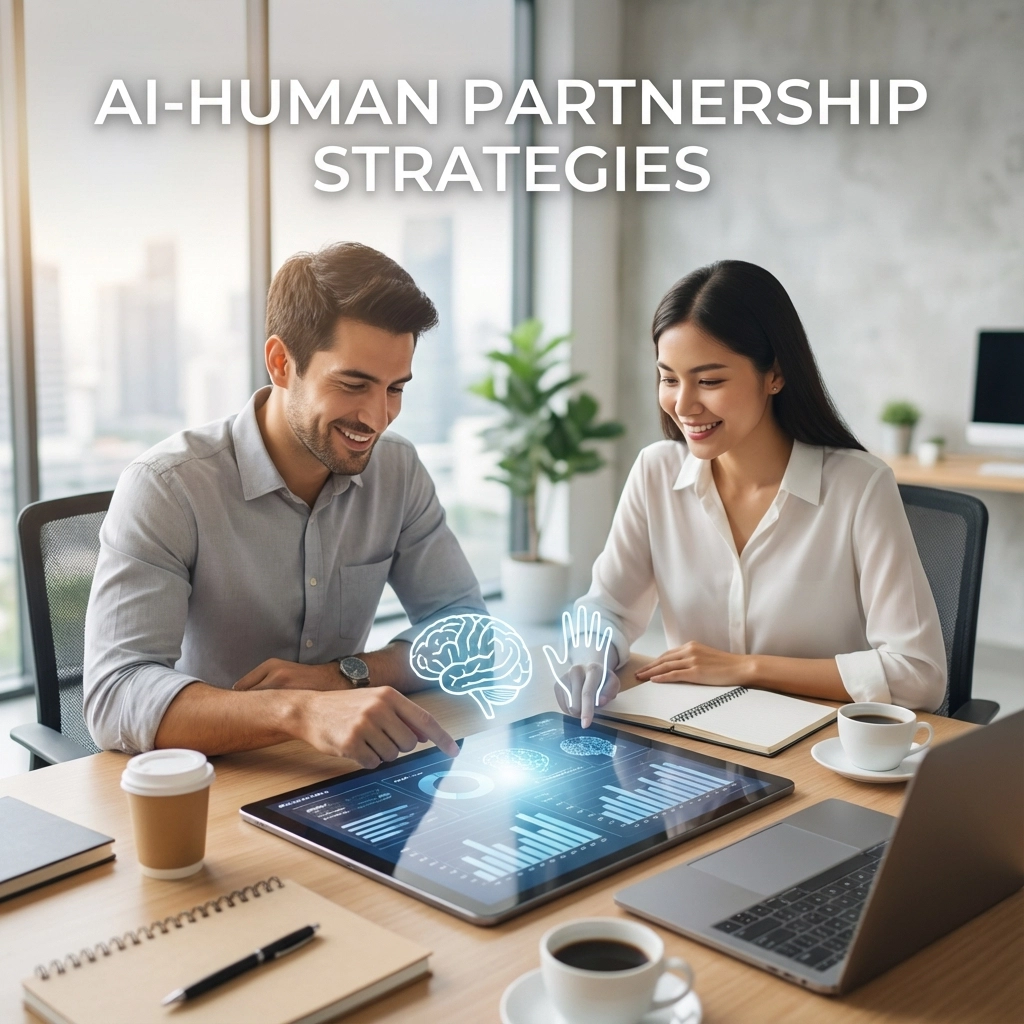
Your performance management system is broken. You know it. Your employees know it. And throwing more AI tools at the problem isn’t fixing anything.
Think you’re solving performance gaps by replacing human judgment with algorithms? Think again.
The real breakthrough isn’t AI versus human. It’s AI with human. And most leaders are getting this partnership completely wrong.
82% of middle-skill jobs now require digital capabilities, yet organizations are still measuring performance like it’s 1995. You’re not broken: you’re at a critical opportunity. The companies cracking this code are seeing performance transformations that seemed impossible just 24 months ago.
Here’s what People Risk Consulting has learned from working with CEOs who’ve successfully closed their performance gaps using AI-human partnerships that actually move the needle.
The Performance Gap Illusion
You think your performance gaps are about skills. Wrong.
They’re about measurement systems that punish collaboration. Every time you pit humans against AI in performance reviews, you create resistance → fear → underperformance → bigger gaps.
The breakthrough happens when you stop asking “How do we make humans perform better?” and start asking “How do we make human-AI teams unstoppable?”
15 Field-Tested Strategies That Close Performance Gaps Fast
Strategy 1-3: Reframe Your Performance Metrics
1. Replace Individual Metrics with Collaboration Scores
Stop measuring Sarah against her pre-AI baseline. Start measuring how Sarah + AI outperforms the old standard. Track:
- AI adoption rates across teams
- Quality improvements when using AI assistance
- Speed of task completion with AI partnership
2. Add AI Collaboration to Performance Reviews
Create formal criteria that recognize employees who effectively leverage AI tools. Make AI proficiency a promotion requirement. Organizations implementing this see 40% faster AI adoption rates.
3. Track Partnership Metrics, Not Replacement Metrics
Measure frequency of AI usage → breadth of application → innovation in AI deployment. Reward employees who find creative AI applications, not those who avoid the technology.
Strategy 4-6: Leverage AI for Smarter Goal Setting
4. Deploy AI-Powered Goal Assistance
Use AI to analyze each employee’s role, past performance, and career aspirations to create personalized performance goals. No more generic objectives that miss the mark.
5. Implement Real-Time Performance Feedback
Traditional annual reviews are dead. Deploy AI that provides continuous, personalized performance insights in the flow of work. Especially powerful for remote and hybrid teams.
6. Generate AI-Driven Conversation Prompts
Give managers AI-generated discussion topics tailored to each employee’s goals, performance history, and development needs. Turn awkward check-ins into breakthrough conversations.
Strategy 7-9: Define Clear Role Boundaries
7. Map AI Tasks vs. Human Tasks
Create explicit boundaries: AI handles data processing, automation, and pattern recognition → Humans own creativity, emotional intelligence, and strategic thinking. No gray areas.
8. Conduct Regular Skill Assessments
Assess both human and AI capabilities quarterly. Identify gaps, reveal biases, and guide upskilling priorities. What your AI can’t do becomes your team’s competitive advantage.
9. Train Employees in Prompt Engineering
This skill is becoming indispensable. Teach your team to craft precise inputs that optimize AI outputs. It’s the difference between mediocre AI assistance and game-changing AI partnership.
Strategy 10-12: Build Essential Partnership Skills
10. Develop Digital Proficiency Programs
Your team needs AI-related skills now, not eventually. Create structured learning paths that build confidence with AI tools alongside core job responsibilities.
11. Create Innovation Payout Structures
Reward AI-driven improvements financially. Make the human-AI partnership profitable for employees, not just the company. Watch adoption rates skyrocket.
12. Launch Collaboration Recognition Programs
Celebrate human-AI partnership wins publicly. Share success stories monthly. Demonstrate that AI adoption leads to advancement, not replacement.
Strategy 13-15: Optimize Manager Effectiveness
13. Use AI for Comprehensive Feedback Summaries
Free managers from administrative burdens by having AI generate feedback summaries and remove calibration bias. Redirect that time to meaningful coaching conversations.
14. Automate Routine Manager Tasks
Let AI handle data-heavy performance tracking → Managers focus on personalized development plans and relationship building. This is where the magic happens.
15. Establish Transparent Communication Channels
Create feedback loops where employees can report AI tool issues and contribute to improvements. Emphasize augmentation over replacement in all communications.
The 90-Day Implementation Framework
Month 1: Audit and Assessment
- Review existing performance metrics
- Identify AI-resistant behaviors
- Map current skill gaps
Month 2: System Implementation
- Deploy new measurement systems
- Train managers on AI-powered feedback tools
- Launch collaboration recognition programs
Month 3: Incentive Alignment
- Introduce innovation payouts
- Make AI proficiency part of promotion criteria
- Collect and share success stories
Why Most AI Performance Initiatives Fail
They focus on technology adoption instead of partnership optimization.
You can’t solve human performance problems with AI tools alone. You solve them by creating systems where humans and AI make each other better.
The companies winning this game aren’t asking “How do we get people to use AI?” They’re asking “How do we create conditions where human-AI collaboration becomes inevitable?”
The Real Talk About Implementation
This isn’t a quick fix. It’s a fundamental shift in how you think about performance.
You’ll face resistance. Some managers will cling to old evaluation methods. Some employees will fear being replaced. Some executives will want faster results.
That’s normal. That’s expected. That’s why most organizations give up too early.
The breakthrough happens around month four, when your teams start discovering AI applications you never imagined. When performance improvements compound. When your people start teaching you about partnership possibilities.
Your Next Move
Performance gaps aren’t disappearing with traditional approaches. They’re getting worse as the pace of change accelerates.
You have two choices: Keep measuring individual performance in isolation, or build systems that amplify human-AI partnerships.
The organizations choosing partnership are pulling ahead fast. The gap between leaders and laggards is widening every quarter.
At People Risk Consulting, we’ve helped dozens of leadership teams implement these strategies successfully. The results speak for themselves: faster performance improvements, higher engagement scores, and breakthrough innovations that seemed impossible before.
Want to see how this applies to your specific performance challenges? Join the live Brave Business Masterclass + Podcast from People Risk Consulting—built for seasoned CEOs who want real talk, practical frameworks, and zero fluff.
Registration is open, but seats are limited. Watch passively via the live stream, or register for the interactive studio audience to get on‑mic Q&A, hot‑seat coaching, and peer exchange with other executives.
Your performance gaps aren’t a sign you’re failing. They’re a signal you’re ready for the next level of organizational capability.
The question isn’t whether AI-human partnerships will define the future of performance management.
The question is whether you’ll lead that transformation or get left behind by it.
