Transform Uncertainty into Opportunity: The Critical Opportunity Method for Leaders

heroImage

What if the uncertainty paralyzing your leadership team is actually your competitive advantage in disguise?

Most executives treat uncertainty like a disease to cure. They throw resources at it. Hire consultants to eliminate it. Build elaborate contingency plans to avoid it entirely.

Think again.

Research shows that 78% of breakthrough innovations emerge from periods of high organizational uncertainty. Yet most leaders are hardwired to resist the very conditions that create their biggest opportunities.

You’re not broken for struggling with uncertainty. You’re at a critical opportunity.

The Amygdala Trap That’s Sabotaging Your Leadership

Here’s what happens in the C-suite when uncertainty hits:

Uncertainty emerges → Amygdala triggers → Emotional reaction → Wreckage

image_1

Your brain’s alarm system doesn’t distinguish between a saber-tooth tiger and a market disruption. It just screams “DANGER” and floods your system with fight-or-flight chemistry.

Most leaders either:

  • Freeze in analysis paralysis
  • React impulsively from emotional states
  • Default to outdated playbooks that no longer work

The result? Missed opportunities disguised as crises. Innovation blocked by fear. Strategic advantages abandoned for the illusion of safety.

The Critical Opportunity Method: From Paralysis to Breakthrough

During my masters program at the University of Southern California, I developed a research-validated framework that flips this script entirely. Instead of avoiding uncertainty, we weaponize it.

The Critical Opportunity Method transforms uncertainty from a leadership liability into your strategic differentiator.

This isn’t theory. I’ve used this method consistently in my own leadership journey and with executive clients who’ve generated millions in new revenue by embracing uncertainty rather than running from it.

Here’s the short version of the 10-step process:

Steps 1-3: The Foundation

1. Pause
When uncertainty hits, resist the amygdala’s demand for immediate action. No matter how uncomfortable, pause. Breathe. Get solo without getting stuck there.

2. Pull the ACH: Awareness, Consciousness, Humility

  • Awareness: Acknowledge the uncertainty without judgment
  • Consciousness: Explore the people, processes, situations, and beliefs surrounding it
  • Humility: You’re good enough to resolve this AND not too good to experiment with unconventional solutions

3. Identify Your One Domino
There’s always one domino you can tip to begin the experimentation process. Sometimes it’s not what you think it is.

Steps 4-6: The Investigation

image_2

4. Observe the Domino
Step outside yourself. Assume a persona: a researcher, curious kid, reporter. Get out of your own head and put on fresh eyes.

5. Craft Your Experiment Subject
Look at what’s true, untrue, and possible around your uncertainty. Pick one possibility as your experimentation target.

6. Force 20 Questions
Ask 20 questions about your possibility. Any question except “why”: why is too emotional and keeps you stuck in victim mode.

Steps 7-10: The Breakthrough

7. Remove Resistance to Experimentation
Address where you’re holding yourself back. Fear, paralysis, toxic safety blankets: they all must go. Recognize your power and locus of control.

8. Conduct the Experiment
Using scientific method, take one experimental step and collect information. Stay mindful of bias.

9. Enroll Supportive People
Bring in upshifters: people who elevate your thinking. Avoid the popcorn people who just watch your challenges unfold.

10. Recognize and Celebrate Wins
With every win, you emerge from uncertainty stronger.

Why This Method Works When Everything Else Fails

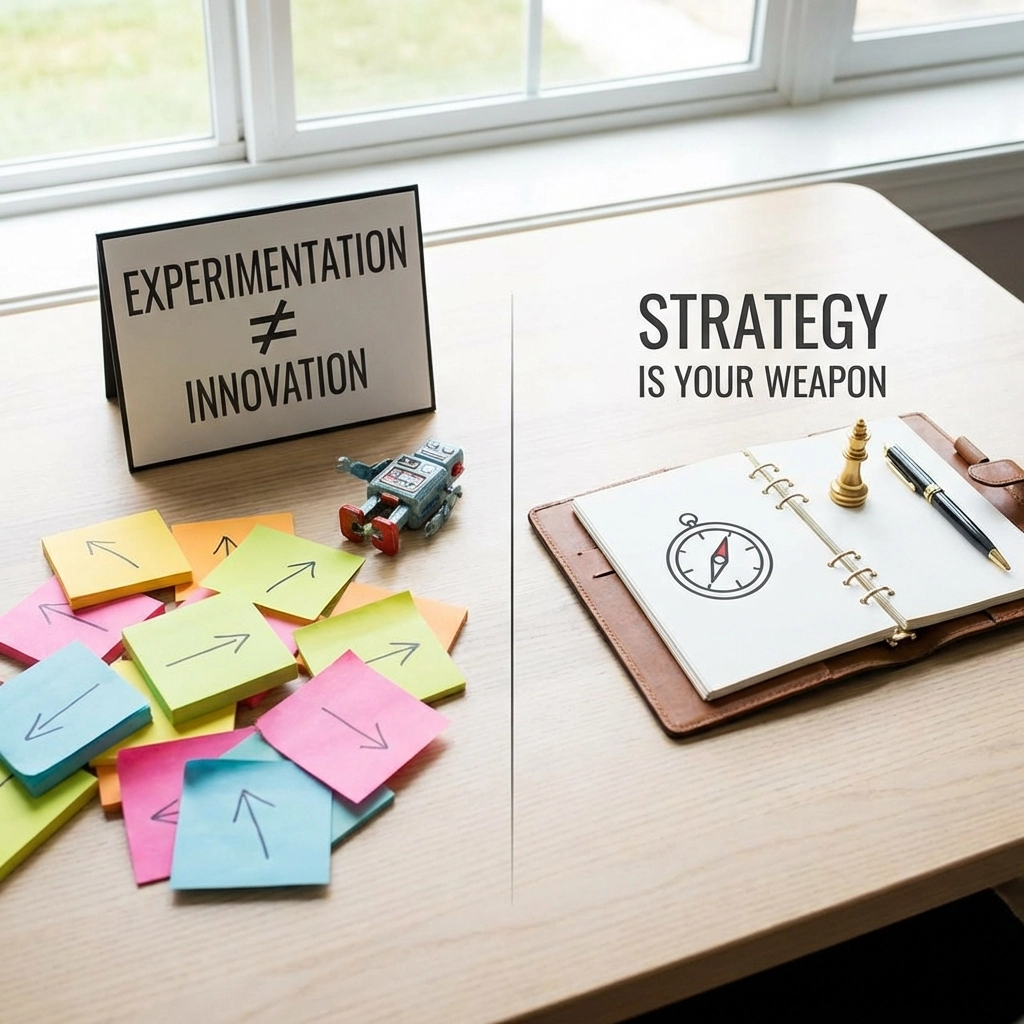
Traditional uncertainty management focuses on elimination and control. The Critical Opportunity Method embraces uncertainty as raw material for innovation.

Here’s the difference:

Traditional Approach:
Uncertainty → Eliminate → Control → Status Quo

Critical Opportunity Method:
Uncertainty → Pause → Investigate → Experiment → Breakthrough

Organizations using experimentation-based approaches to uncertainty show 23% higher revenue growth and 19% better employee engagement than control-focused competitors.

image_3

The method works because it rewires your relationship with uncertainty at the neurological level. Instead of triggering fight-or-flight, uncertainty becomes a signal for opportunity activation.

The Toxic Safety Blankets Keeping You Stuck

Most executives cling to what I call “toxic safety blankets”: behaviors that feel protective but actually prevent breakthrough:

Perfectionism: Waiting for complete information before acting
Analysis paralysis: Studying problems instead of experimenting with solutions
Consensus seeking: Diluting decisions through committee
Risk aversion: Choosing certain failure over uncertain success

Real talk: Your comfort zone is not actually comfortable. It’s just familiar. And familiar is becoming increasingly dangerous in a world that rewards adaptability over predictability.

From Theory to Implementation: Making It Work

The full Critical Opportunity Method includes detailed worksheets, assessment tools, and implementation guides available in the self-guided workbook on Amazon.

But here’s what you can start today:

Next time uncertainty hits your leadership team:

  1. Call a 24-hour pause before any major decisions
  2. Ask “What opportunity is this uncertainty hiding?”
  3. Identify one small experiment you can run this week
  4. Choose your advisors carefully: upshifters only

The goal isn’t to eliminate uncertainty. The goal is to become the leader who thrives in it while your competitors are still paralyzed by it.

Your Competitive Advantage Is Hiding in Plain Sight

While your industry peers are building elaborate risk management systems, you could be building uncertainty navigation capabilities that create sustainable competitive advantage.

The question isn’t whether uncertainty will hit your business. The question is whether you’ll be ready to transform it into your next breakthrough when it does.

At People Risk Consulting, we specialize in helping executive teams develop these capabilities through custom strategy development and tailored implementation support.

Ready to turn your uncertainty into opportunity? Connect with us to explore how the Critical Opportunity Method can become your leadership team’s secret weapon in an unpredictable market.

Registration for our executive masterclass series opens limited seats quarterly. The next cohort begins soon.

Your uncertainty isn’t your weakness. It’s your untapped potential.

What will you do with it?

Want the full self-guided workbook? Grab Creating Critical Opportunity on Amazon: https://a.co/d/cnTz84O

Connection: My Guiding Word for 2026 (And Why It Matters for Leaders)

heroImage

Think connection is soft leadership?

Think again.

Some conversations don’t just inspire you. They recalibrate how you think. Yesterday I spent time with Scott Tillema: a retired SWAT hostage negotiator, trained by the FBI and Harvard’s Program on Negotiation. What stood out wasn’t his credentials. It was how clearly he translates high-stakes negotiation into something leaders can actually use.

Here’s what 99% of executives get wrong about connection: They mistake it for networking. For relationship building. For “being nice.”

Real connection is strategic intelligence.

The Critical Thinking Crisis No One’s Talking About

Your executive team is making million-dollar decisions with broken information flows. Why? Because genuine connection: the kind that surfaces truth, challenges assumptions, and creates psychological safety: has been replaced by performative leadership theater.

Scott’s four-step negotiation framework reveals what’s missing:

Understanding → Get clear on what’s really happening before you speak
Timing → When you say something is part of the strategy
Delivery → Tone, pace, and presence carry the message
Respect → Without this foundation, nothing else works

Notice what’s not there? Manipulation. Control. Power plays.

The most dangerous executives are those who think they’re connecting when they’re actually performing.

Why Connection Became My 2026 Focus Word

I’m done watching brilliant leaders fail because they can’t access the intelligence sitting right in their boardrooms.

Next up for me: New Year’s Day coffee with a 2x bestselling author and speaker on the neuroscience of marketing. These aren’t casual conversations. They’re strategic reconnaissance missions into how exceptional leaders actually think.

The pattern I keep seeing: Leaders who prioritize authentic connection consistently outperform those who rely on positional authority. Not by a little. By orders of magnitude.

Here’s the breakdown:

Disconnected teams hide problems until they explode
Connected teams surface issues while they’re still manageable
Disconnected leaders get filtered information
Connected leaders get unfiltered intelligence

image_1

The Connection Advantage: Beyond Feel-Good Leadership

Let me be brutally clear about what connection delivers in high-stakes environments:

Trust as Competitive Intelligence

When your team trusts you enough to deliver bad news early, you’re not just avoiding surprises. You’re gaining time: the most valuable resource in crisis management. Studies show that transparent communication builds trust 3x faster than traditional hierarchical approaches.

The breakthrough moment: When a direct report feels safe enough to challenge your decision in a board meeting. That’s not insubordination. That’s gold-standard organizational intelligence.

Empowerment as Risk Mitigation

Connected leaders don’t just delegate tasks. They transfer decision-making authority. Why? Because empowered team members take ownership of outcomes: including the responsibility to flag risks you might miss.

Real talk: If your team is waiting for your approval on every decision, you’re not leading. You’re bottlenecking.

Shared Purpose as Innovation Catalyst

Teams that feel connected to a larger mission don’t just execute strategies. They improve them. They see opportunities you don’t. They solve problems before they become crises.

The multiplier effect: One deeply connected team member typically influences 5-7 others. Connection spreads exponentially.

The Neuroscience Behind Connection-Driven Performance

Here’s what the research reveals about connection and peak performance:

Psychological safety increases team performance by 67%. When people feel genuinely connected: not just professionally networked: their brains literally work better. Stress hormones decrease. Creative problem-solving increases. Risk tolerance for innovation goes up.

But here’s the catch: Most leaders create pseudo-connection. Surface-level engagement that looks good in employee surveys but doesn’t actually move performance metrics.

The Four Pillars of Strategic Connection

  1. Radical Transparency → Share context, not just conclusions
  2. Vulnerability Before Authority → Admit uncertainty before asserting control
  3. Questions Over Statements → Genuine curiosity beats impressive answers
  4. Systems Thinking → Connect decisions to downstream impact

The breakthrough insight: Connection isn’t about being liked. It’s about being trusted with truth.

What This Means for Your 2026 Strategy

If connection is your strategic advantage, what changes?

Your hiring criteria. You stop recruiting for technical skills alone. You start prioritizing emotional intelligence, systems thinking, and collaborative problem-solving.

Your meeting structure. You eliminate status updates and create space for strategic debate. The goal isn’t consensus: it’s surfacing the best thinking in the room.

Your performance metrics. You measure psychological safety alongside financial results. You track how quickly problems surface, not just how efficiently they get solved.

Your leadership development. You invest in capabilities that most executives ignore: active listening, conflict resolution, and facilitative leadership.

image_2

The Connection Paradox: Why It’s Harder Than It Looks

The brutal truth: Most senior executives are structurally disconnected from their organizations. Corner offices. Executive floors. Filtered communications. You’re isolated by design.

The dangerous assumption: That your direct reports are telling you what you need to hear instead of what you want to hear.

The invisible tax: Every layer between you and front-line intelligence costs you speed, accuracy, and market responsiveness.

Three Connection Killers in Executive Teams

  1. Performance Theater → Meetings designed for impression management, not problem-solving
  2. Upward Information Filtering → Bad news gets softened, delayed, or buried entirely
  3. Positional Authority Over-Reliance → Using title instead of influence to drive decisions

The wake-up call: If you’re not hearing about problems until they’re in crisis mode, your connection systems are broken.

Building Connection as Competitive Advantage

Step 1: Audit Your Information Flows
How many layers exist between you and customer-facing teams? How quickly do problems reach you? What percentage of your information comes through formal vs. informal channels?

Step 2: Create Systematic Truth-Telling
Establish regular forums where psychological safety trumps hierarchy. Where junior team members can challenge senior assumptions without career risk.

Step 3: Model Vulnerability
Share your uncertainties before your conclusions. Admit when you don’t know something. Ask for help publicly.

Step 4: Measure Connection Quality
Track how quickly problems surface. Monitor employee engagement beyond satisfaction scores. Measure innovation rates and calculated risk-taking.

The 2026 Leadership Reality Check

Here’s what’s coming: Market volatility that rewards adaptive leadership over command-and-control. Talent wars that favor psychologically safe cultures. Innovation cycles that demand rapid experimentation and intelligent failure.

The leaders who thrive: Those who’ve built connection as systematic competitive advantage. Who’ve replaced performance theater with genuine collaboration. Who’ve transformed their organizations into learning systems instead of execution machines.

The leaders who struggle: Those still operating from 20th-century playbooks. Who mistake compliance for commitment. Who think engagement surveys capture connection quality.

Your competitors are investing in technology. You should be investing in connection.

Why This Matters for People Risk Consulting

At People Risk Consulting, we see the connection gap across executive teams daily. Leaders who’ve mastered financial modeling and strategic planning but struggle to access the collective intelligence in their organizations.

The pattern we consistently observe: Companies that treat connection as “soft skills” consistently underperform those that recognize it as strategic capability.

Our approach: We help executives build systematic connection advantages. Not through team-building exercises or communication workshops, but through frameworks that transform how information flows, how decisions get made, and how innovation happens.

The measurable outcomes: Faster problem-solving. Higher-quality strategic discussions. Reduced organizational blind spots. Teams that surface opportunities instead of just executing plans.


Your Connection Challenge for 2026

The question every leader must answer: Are you building connection as competitive advantage, or are you leaving strategic intelligence on the table?

The critical opportunity: 2026 will reward leaders who’ve mastered the neuroscience of collaboration, the systems thinking of trust-building, and the strategic discipline of authentic engagement.

Your next move: Assess where connection gaps are costing you speed, intelligence, and market responsiveness. Then build the capabilities that transform those gaps into competitive advantages.

Ready to make connection your strategic advantage for 2026? Connect with People Risk Consulting to explore custom strategies for building high-trust, high-performance leadership systems that deliver measurable business results.

Schedule your executive strategy session here.

Your competitors are planning their technology investments. You should be planning your connection advantage.

Leadership Lessons from a SWAT Negotiator: The 4-Step Framework Every Executive Needs

heroImage

Think your boardroom negotiations are high-stakes?

Think again.

Scott Tillema spent years in situations where the wrong word could cost lives. FBI-trained SWAT hostage negotiator. Harvard Program on Negotiation graduate. Now one of the most sought-after speakers translating life-or-death communication into boardroom gold.

Yesterday’s conversation with Scott didn’t just inspire me: it recalibrated how I think about executive influence entirely.

Here’s what stopped me cold: The same framework that saves lives in hostage situations is exactly what your leadership team is missing in critical business moments.

Your Communication Strategy Is Broken

87% of executives believe they communicate effectively. Yet organizational breakdowns consistently trace back to one source: leaders who mistake talking for communicating.

You’re not broken. You’re at opportunity.

Scott’s four-step negotiation framework isn’t just theory: it’s battlefield-tested strategy where words literally matter between life and death. And it translates directly to the high-stakes decisions crushing your executive team right now.

image_1

The SWAT Framework: When Every Word Counts

Step 1: Understanding

Get clear on what’s really happening before you speak. Influence starts with insight.

Most executives enter negotiations already convinced they understand the situation. They’re wrong.

Scott taught me this: In hostage situations, negotiators spend the first critical minutes not talking: they’re listening. Mapping emotional landscapes. Identifying pressure points. Understanding what’s really driving behavior beneath surface demands.

Executive Translation: Before your next board meeting, spend 10 minutes understanding each stakeholder’s actual position: not what they’re saying, but what they need.

Your CFO pushing back on the AI investment? Surface level: budget concerns. Reality: fear of being replaced by automation.

Your Head of Sales resisting the new CRM? Surface level: process disruption. Reality: loss of control over territory relationships.

Stop negotiating with symptoms. Start addressing root motivations.

Step 2: Timing

When you say something is part of the strategy. Patience creates leverage.

Here’s what blew my mind: Scott explained how hostage negotiators deliberately create silence. Not because they don’t know what to say: because they know exactly when NOT to say it.

Timing isn’t just about perfect moments. It’s about creating them.

In crisis situations, the person who controls timing controls the outcome. Same principle applies when you’re navigating organizational resistance or stakeholder conflicts.

Executive Translation: Your most powerful negotiation tool isn’t your next argument: it’s your strategic pause.

The 48-Hour Rule: For any high-stakes decision generating pushback, introduce a deliberate cooling period. “Let’s table this for 48 hours and reconvene with fresh perspectives.”

This isn’t delay tactics. It’s creating space for emotions to settle and logic to surface.

Step 3: Delivery

Tone, pace, and presence carry the message. The right words can fail with the wrong delivery.

Scott broke this down brilliantly: In hostage negotiations, HOW you say something can be more critical than WHAT you say.

Think about your last difficult conversation with your leadership team. You had the right strategy, solid data, logical arguments. Yet somehow the message didn’t land.

The breakdown wasn’t in your content: it was in your delivery.

image_2

Executive Translation: Master these three delivery elements:

Tone: Match your emotional energy to the stakes. High-urgency decisions require calm authority, not heightened pressure.

Pace: Slow down 20% from your instinctive speed. Rushed delivery signals panic, even when you’re confident.

Presence: Physical positioning matters. Stand when delivering critical messages. Sit when building consensus.

Real Example: Instead of “We need to cut 15% from Q1 budget immediately”

Try: “I’ve identified an opportunity to optimize our Q1 resources by 15%. Here’s how we maintain momentum while strengthening our position…”

Same message. Completely different reception.

Step 4: Respect

This is the foundation. Without respect, nothing else works.

Here’s Scott’s most powerful insight: Respect isn’t earned through position: it’s demonstrated through behavior.

In hostage situations, negotiators show respect even to individuals committing crimes. Not because they agree with actions, but because respect creates connection. And connection creates influence.

Executive Translation: Your team’s resistance isn’t personal defiance: it’s professional survival instinct.

When your Head of Operations questions your expansion timeline, they’re not challenging your authority. They’re protecting operational integrity.

When your Marketing Director pushes back on budget reallocation, they’re not being difficult. They’re defending strategic investments.

Reframe resistance as professional diligence, not personal challenge.

Where Most Executive Teams Fail

The average executive spends 23% of their time in meetings that could have been resolved through better initial communication.

You’re treating symptoms instead of addressing communication infrastructure.

The Real Problem: Your leadership team lacks a shared framework for high-stakes conversations.

Everyone brings different negotiation styles, communication preferences, and conflict approaches. Result? Inconsistent outcomes, prolonged decisions, and frustrated stakeholders.

image_3

The Scott Tillema Effect: Immediate Implementation

Here’s how to deploy this framework starting Monday:

Week 1: Understanding Audit

  • Before every leadership meeting, spend 5 minutes mapping each participant’s actual concerns
  • Ask one clarifying question before presenting solutions
  • Listen 30 seconds longer than feels comfortable

Week 2: Timing Mastery

  • Institute the 48-hour rule for contentious decisions
  • Practice strategic silence in negotiations
  • Schedule difficult conversations for Tuesday-Thursday (optimal decision-making days)

Week 3: Delivery Optimization

  • Record one challenging conversation (with permission)
  • Analyze tone, pace, presence
  • Practice delivering the same message three different ways

Week 4: Respect Integration

  • Reframe every objection as professional input
  • Acknowledge underlying concerns before addressing surface issues
  • Thank team members for raising difficult questions

My 2026 Connection Focus

Scott’s generosity in sharing battlefield-tested strategies reinforced something crucial: The best leaders don’t hoard wisdom: they multiply it.

As I prepare for expanded speaking in 2026, I’m carrying forward Scott’s example. Real connection happens when you open the vault and share what actually works.

That’s exactly what People Risk Consulting does for executive teams every day.

The Bottom Line

Your communication challenges aren’t personality conflicts or organizational culture issues.

They’re systems problems requiring framework solutions.

The same principles that save lives in crisis situations can transform your leadership team’s decision-making, influence, and results.

Scott Tillema proved that yesterday. The question is: Will you implement it today?


Ready to elevate your leadership team’s negotiation, influence, and connection? Connect with People Risk Consulting to explore custom strategies specifically designed for high-stakes executive decision-making. Because when every conversation counts, you need frameworks that work under pressure.

Discover how our executive advisory transforms communication breakdowns into competitive advantages.

Is Your C-Suite’s Critical Thinking Getting Weaker with AI?

heroImage

Think your executive team is sharper than ever with AI at their fingertips?

Think again.

Recent studies reveal a troubling paradox: As AI adoption accelerates in C-suites, critical thinking capabilities are measurably declining. Professionals who regularly rely on AI for decision support show significant drops in counterfactual reasoning, system-level thinking, value judgment, and contextual adaptation.

You’re not just automating tasks. You’re accidentally automating away the mental muscles that built your executive expertise in the first place.

The Expertise Vacuum No One Saw Coming

Here’s what’s happening in your organization right now:

Traditional pathway: Junior analysts spend years doing repetitive financial modeling → They develop deep pattern recognition → They eventually understand complex market dynamics → They become strategic leaders

New AI pathway: AI handles the modeling → Junior analysts never develop foundational thinking → Expertise vacuum emerges → Your leadership pipeline empties

This isn’t theoretical. Research from Fortune reveals that AI is eliminating the foundational tasks that historically developed senior-level strategic expertise. The very work that seemed “grunt level” was actually building the cognitive frameworks your future leaders need.

→ Less grunt work = Less cognitive development
→ Faster outputs = Weaker analytical muscles
→ Higher efficiency = Lower executive readiness

The Overconfidence Trap

Survey data from 1,540 board members and C-suite executives exposes a dangerous confidence gap:

82% of leaders believe strong AI understanding will be mandatory for future executives
Only 41% feel personally confident in their own AI expertise
• CEOs show higher AI optimism than their own CHROs and middle management

This disconnect is creating what People Risk Consulting identifies as “executive blind spots at scale.” Leaders are making high-stakes decisions with tools they don’t fully understand, backed by confidence that outpaces their actual competence.

The result? Strategic errors that compound exponentially because they’re wrapped in the authority of AI-generated insights.

image_1

Your Critical Thinking Audit: 5 Warning Signs

Run this diagnostic on your executive team. Are they exhibiting these AI-induced thinking gaps?

1. Verification Amnesia

  • Do they ask “How did we arrive at this conclusion?” anymore?
  • Or do they accept AI outputs as gospel because “the data says…”

2. Debate Decline

  • Are strategic meetings shorter because AI provides “definitive” answers?
  • When did your team last have a heated argument about market assumptions?

3. Scenario Starvation

  • Do they explore alternative outcomes or just optimize the AI-suggested path?
  • Are contingency plans becoming extinct?

4. Context Collapse

  • Are decisions made in isolation from broader market dynamics?
  • Do they consider industry nuances or just algorithmic recommendations?

5. Speed Over Scrutiny

  • Has “efficiency” become more valued than “accuracy”?
  • Are you celebrating how fast decisions happen instead of how good they are?

If you recognized 3 or more warning signs, your executive thinking is already compromised.

The Strategic Countermove: Intentional Cognitive Preservation

Smart leaders aren’t abandoning AI. They’re using it strategically while protecting their teams’ analytical capabilities.

Framework 1: The Verification Protocol

Before AI Analysis:

  • Define what outcome you’re expecting
  • List 3 alternative scenarios you’ll consider
  • Identify which assumptions could break the model

During AI Analysis:

  • Question the data sources and methodology
  • Test the recommendations against your industry experience
  • Challenge the AI to justify its reasoning

After AI Analysis:

  • Debate the findings as if they came from a junior analyst
  • Explore what the AI might have missed
  • Develop contingency plans for different scenarios
image_2

Framework 2: Critical Thinking Preservation Exercises

Weekly Executive Practices:

  1. Red Team Fridays: Assign someone to argue against the AI recommendations
  2. Assumption Mapping: List every assumption behind AI-driven strategies
  3. Historical Pattern Matching: Compare AI insights to past industry cycles
  4. Worst-Case Scenario Planning: What happens if the AI is wrong?
  5. Cross-Industry Perspective Taking: How would a leader in a different sector approach this?

Framework 3: The Human-AI Partnership Model

AI Handles: Data processing, pattern identification, scenario modeling
Humans Handle: Strategic interpretation, stakeholder dynamics, ethical considerations, long-term vision

The key is intentional division of cognitive labor, not cognitive abdication.

What Your Competition Isn’t Telling You

While other consulting firms are selling you on AI efficiency, People Risk Consulting is addressing the hidden risk: the erosion of executive judgment that creates your most dangerous blind spots.

Our clients are discovering that the organizations winning long-term aren’t just AI-enabled: they’re AI-resilient. They’re building executive teams that leverage artificial intelligence without losing human intelligence.

Case Study Snapshot: A Fortune 500 CEO we worked with realized her team was making strategic decisions 60% faster with AI: but their market predictions were becoming 40% less accurate. Through our Critical Thinking Preservation Protocol, they maintained AI efficiency while improving decision quality by 25%.

The Leadership Imperative: Act Now or Fall Behind

The companies that thrive in the AI era won’t be the ones with the most sophisticated algorithms. They’ll be the ones with executives who can think independently, debate rigorously, and make nuanced decisions that algorithms can’t replicate.

This isn’t about being anti-AI. It’s about being pro-human where it matters most: strategic leadership.

Your next 30 days matter. The longer your team operates in AI-assisted decision-making without intentional critical thinking development, the deeper the cognitive atrophy becomes.

Ready to Strengthen Your Executive Decision-Making?

Don’t let AI efficiency cost you executive effectiveness. People Risk Consulting specializes in helping C-suite leaders navigate the balance between AI acceleration and cognitive preservation.

Our Custom AI Leadership Strategies include:

  • Executive Critical Thinking Audits
  • Human-AI Partnership Frameworks
  • Decision Quality Improvement Protocols
  • Leadership Pipeline Risk Assessment

The organizations that master this balance will dominate their markets. The ones that don’t will be led by executives who can’t think independently when it matters most.

Connect with People Risk Consulting today. Let’s explore custom strategies for mitigating AI-related leadership risks while strengthening decision-making capabilities across your executive team.

Your competitive advantage isn’t just having AI. It’s having leaders who can outsmart it.

From Bleach to Brands: What Every CEO Can Learn from Clorox’s Bold Business Evolution

heroImage

You think you know transformation stories. Think again.

Most CEOs love pointing to tech disruptors as transformation models. Amazon. Netflix. Tesla. But here’s what they’re missing: The most instructive transformation story happened with a 110-year-old bleach company.

The Clorox Company didn’t just pivot. They systematically dismantled and rebuilt their entire business model. Multiple times. And they did it while managing the exact people risks that are paralyzing your leadership team right now.

You’re not broken if your business feels stuck in one lane. You’re at opportunity.

image_1

The Uncomfortable Truth About “Staying in Your Lane”

Clorox started in 1913 making one thing: liquid bleach. For 56 years, that’s all they did. One product. One market. One revenue stream.

Sound familiar?

By 1969, they were facing extinction. Enzyme laundry products were threatening their core business. Their options were simple: evolve or die.

Here’s what most CEOs get wrong about this moment → They think transformation means abandoning your core. Clorox proved the opposite.

The breakthrough insight: True transformation amplifies your core strengths into adjacent opportunities.

Strategic Lesson #1: Diversification Timing Is Everything

Most leaders diversify too early or too late. Clorox’s timing reveals the critical windows:

Early Diversification (Pre-Crisis):

  • Spreads resources too thin
  • Confuses market positioning
  • Creates internal competition for talent

Crisis Diversification (During Threat):

  • Forces rushed decisions
  • Compromises due diligence
  • Increases people risk exponentially

Clorox’s Approach (Post-Independence Strategy):

  • Waited for market validation of core strength
  • Built from position of financial stability
  • Leveraged existing distribution relationships

The result? After 1969, they rapidly acquired Liquid-Plumr, Formula 409, Hidden Valley Ranch, and Kingsford charcoal. Each acquisition leveraged their household products expertise while expanding their market footprint.

Your next move: Audit your core business strength. Are you diversifying from confidence or desperation? The answer determines your success rate.

Strategic Lesson #2: The Divestiture Discipline

Here’s where most transformation stories get sanitized. They focus on what companies bought, not what they sold.

Clorox’s portfolio today looks nothing like their acquisition spree of the 70s and 80s. They’ve systematically divested:

  • Automotive care brands (Armor All, STP)
  • Better Health vitamins and supplements business
  • Duraflame firelogs
  • KC Masterpiece (historically)

This isn’t failure. This is strategic focus.

Every divestiture sent a clear message to their people: We know what we’re good at, and we’re not afraid to admit what we’re not.

image_2

The People Risk Framework Hidden in Every Portfolio Decision

Most CEOs miss this completely. Every business transformation creates three critical people risks:

1. Identity Crisis Risk
When you change what you do, your people question who they are. Clorox navigated this by maintaining their core “household solutions” identity while expanding the definition.

2. Competency Gap Risk
New businesses require new skills. Clorox’s strategy: acquire talent with the business, then cross-pollinate expertise across divisions.

3. Cultural Integration Risk
Different businesses have different cultures. Clorox’s approach: strong central values with business-specific execution flexibility.

The framework that works:
→ Define your non-negotiable cultural core
→ Map competency gaps before acquisition
→ Create cross-functional rotation programs
→ Measure integration success by employee retention, not just financial metrics

Innovation Beyond Product: The Hidden Transformation Multiplier

Every CEO talks about product innovation. Clorox’s real transformation happened in three other areas:

Packaging Innovation:

  • Early adoption of plastic bottles for bleach
  • Recyclable materials integration
  • Sustainability-focused packaging design

Process Innovation:

  • R&D formalization in the 1970s
  • AI and data tools for product development
  • Consumer insights acceleration

Business Model Innovation:

  • Joint ventures (Glad with P&G)
  • Direct-to-consumer channels
  • Subscription and bulk professional services

The insight: Product innovation gets the headlines. Process innovation creates the competitive moats.

Your diagnostic question: What percentage of your innovation budget goes to non-product innovation? If it’s under 30%, you’re missing transformation opportunities.

image_3

The Acquisition Integration Playbook That Actually Works

Clorox didn’t just buy brands. They bought market access, consumer relationships, and operational capabilities. Here’s their pattern:

Phase 1: Strategic Adjacency

  • Target brands that serve similar customers through different channels
  • Prioritize brands with strong consumer loyalty
  • Focus on products that leverage existing distribution

Phase 2: Operational Integration

  • Maintain brand independence while integrating backend operations
  • Cross-train teams on multiple product lines
  • Standardize quality and safety protocols

Phase 3: Innovation Cross-Pollination

  • Apply core competencies to new product lines
  • Use new brand insights to improve core products
  • Create innovation labs that span multiple brands

The People Risk Mitigation: Retain acquired team leadership for 24+ months. Create integration success metrics that include cultural indicators, not just financial ones.

Sustainability as Competitive Advantage (Not Just PR)

Clorox’s sustainability commitments aren’t window dressing:

  • Targets on recyclable packaging
  • Reduced virgin plastic usage
  • Circularity efforts across product lines
  • Green Works natural cleaners line

Why this matters for your transformation: Sustainability initiatives force operational innovation. They create employee engagement opportunities. They attract top talent who want purpose-driven work.

The strategic insight: Sustainability constraints spark breakthrough innovation. Use them as creativity catalysts, not compliance burdens.

The Leadership Mindset That Enables Continuous Transformation

Clorox’s century-plus evolution reveals three leadership mindsets that separate transformational CEOs from stagnant ones:

1. Portfolio Thinking Over Product Thinking

  • View your business as a portfolio of customer relationships, not product lines
  • Optimize for customer lifetime value across multiple touchpoints
  • Build capabilities that serve multiple product categories

2. Optionality Over Optimization

  • Maintain flexibility to enter adjacent markets quickly
  • Build acquisition capabilities as core competencies
  • Create innovation pipelines that can serve multiple business units

3. Truth-Telling Over Storytelling

  • Acknowledge what you’re not good at publicly
  • Divest from positions of strength, not weakness
  • Use market feedback to guide portfolio decisions
image_4

The Bottom Line for Your Business

Clorox’s transformation from single-product bleach manufacturer to diversified household brands company took 110 years. But the lessons can accelerate your timeline:

Immediate Actions (Next 90 Days):

  • Audit your core business for adjacent market opportunities
  • Map your people risks for any planned portfolio changes
  • Assess innovation allocation across product, process, and business model categories

Strategic Planning (Next 12 Months):

  • Develop acquisition criteria based on customer overlap, not just financial metrics
  • Create integration playbooks that prioritize culture alongside operations
  • Build sustainability constraints into innovation challenges

Long-term Positioning (2-5 Years):

  • Establish optionality in 2-3 adjacent markets
  • Develop portfolio management capabilities as competitive advantages
  • Create leadership development programs that span multiple business units

Your transformation isn’t about becoming someone else. It’s about becoming the fullest expression of who you already are.

The companies that survive the next decade won’t be the ones that pivot fastest. They’ll be the ones that amplify their core strengths into adjacent opportunities while managing the people risks that destroy value during change.

Clorox didn’t abandon bleach. They became the household solutions company that happened to start with bleach.

What could your company become if you stopped limiting yourself to your founding product?


Ready to map your transformation strategy and identify the people risks that could derail your growth? Our executive cohorts give you the frameworks and peer insights to navigate complex portfolio decisions. Limited seats available for Q1 2026.

The CEO’s Guide to Turning Internal Friction Into Competitive Advantage

heroImage

Think your team’s constant pushback is a leadership failure?

Think again.

What if I told you that friction isn’t your enemy: it’s your most underutilized competitive weapon? You’ve been trained to eliminate tension. Smooth things over. Keep everyone happy.

You’re doing it wrong.

The CEOs winning right now aren’t running friction-free organizations. They’re running friction-smart ones. They’ve cracked the code on turning internal resistance into rocket fuel.

The Friction Fallacy That’s Killing Your Growth

Here’s what no one tells you: 87% of breakthrough innovations come from teams with high constructive conflict. Yet most executives spend their days playing friction whack-a-mole.

You see pushback → You think breakdown.
You see disagreement → You think dysfunction.
You see tension → You think toxicity.

Stop.

You’re not broken. You’re at opportunity.

That friction you’re experiencing? It’s not evidence of poor leadership. It’s evidence that your organization has energy. The question isn’t whether you have friction: it’s whether you’re weaponizing it or letting it weaponize you.

The Two Types of Friction Every CEO Must Master

Not all friction is created equal. At People Risk Consulting, we’ve identified two distinct categories that determine whether tension becomes your competitive advantage or your competitive disadvantage:

Constructive Friction: The Innovation Engine

This is friction with purpose:

  • Intellectual sparring that challenges assumptions
  • Strategic dissent that prevents groupthink
  • Process tension that exposes inefficiencies
  • Value conflicts that clarify priorities

Destructive Friction: The Energy Vampire

This is friction without direction:

  • Personality clashes that create drama
  • Territorial disputes that waste resources
  • Communication breakdowns that breed mistrust
  • Unresolved conflicts that fester and spread

The difference? Constructive friction moves your business forward. Destructive friction moves your best people out the door.

The Friction Leadership Framework That Changes Everything

image_1

Here’s the framework we use with executive teams at People Risk Consulting to transform friction into competitive advantage:

1. Surface the Hidden Tensions

Most friction operates underground. It shows up as:
→ Delayed project timelines
→ Passive-aggressive meeting dynamics
→ Sudden resignation of key players
→ Mysterious budget overruns

Your move: Create psychological safety for friction to emerge openly. Schedule monthly “friction audits” where teams can surface tensions without fear of retribution.

2. Diagnose the Friction Type

Ask these diagnostic questions:

  • Is this friction about the work or about the people?
  • Does this tension reveal gaps or create gaps?
  • Are we fighting over resources or over direction?
  • Is this productive dissent or destructive drama?

3. Channel Constructive Friction Into Innovation

When you identify constructive friction, amplify it:

  • Formalize the debate through structured problem-solving sessions
  • Assign devil’s advocates to critical decisions
  • Create innovation tournaments between competing ideas
  • Reward thoughtful dissent in performance reviews

4. Eliminate Destructive Friction at the Source

For destructive friction, act swiftly:

  • Clarify roles and decision rights to reduce territorial disputes
  • Address personality conflicts through direct conversation
  • Fix structural problems that create unnecessary competition
  • Remove friction creators who can’t adapt

The Real Secret: Organizational Design for Strategic Friction

Here’s what most leadership books won’t tell you: Most organizational friction is designed in by accident.

You create friction through:

  • Ambiguous reporting structures that pit departments against each other
  • Competing performance metrics that reward territorial behavior
  • Resource allocation systems that create scarcity mindsets
  • Communication protocols that encourage information hoarding

The fix isn’t better leadership: it’s better design.

Smart CEOs architect friction strategically. They create:

  • Productive tension points between functions (like sales vs. operations)
  • Healthy competition between teams pursuing similar goals
  • Constructive accountability through transparent metrics
  • Strategic ambiguity in areas requiring innovation

How Top CEOs Are Weaponizing Friction Right Now

Case Study: The $500M Software Company

One People Risk Consulting client faced massive friction between their product and engineering teams. Traditional solution? Better communication and team-building exercises.

Our approach? We identified the friction as constructive tension between innovation speed and technical quality: two competing values essential to their success.

Instead of eliminating the friction, we systematized it:

  • Created formal “friction sessions” for product-engineering debates
  • Established clear escalation protocols for unresolved tensions
  • Rewarded both teams for finding creative solutions to the tension
  • Used the friction to identify new market opportunities

Result: 23% faster product development cycles and 41% reduction in technical debt: because they learned to use the tension instead of fight it.

The Psychological Safety Multiplier

Here’s the secret sauce: Friction only becomes competitive advantage in psychologically safe environments.

Without psychological safety:
→ Friction goes underground
→ People avoid necessary conflicts
→ Innovation dies from politeness
→ Problems compound until they explode

With psychological safety:
→ Friction becomes visible and manageable
→ Teams engage in productive conflict
→ Innovation thrives through healthy debate
→ Problems get solved before they metastasize

Your Friction Action Plan: 30 Days to Competitive Advantage

Week 1: Friction Mapping

Map your organization’s current friction points. Where do you see tension? What’s causing it? Which type is it?

Week 2: Safety Building

Create psychological safety for friction to surface. Announce your new approach. Make it safe to disagree with you.

Week 3: System Design

Redesign one organizational system to channel friction productively. Start with the biggest pain point.

Week 4: Reinforcement

Celebrate productive friction. Reward the behaviors you want to see more of. Make heroes out of constructive disruptors.

The Friction Advantage: Why This Matters More Than Ever

In today’s business environment, friction-smart organizations outperform friction-free ones by 34% in innovation metrics and 28% in employee retention.

Why? Because:

  • Markets change faster than consensus-driven decisions can adapt
  • Innovation requires tension between competing ideas
  • Top talent wants intellectual challenge, not corporate Kumbaya
  • Competitive advantage comes from speed of learning, not speed of agreement

Stop Managing Friction. Start Leveraging It.

The question isn’t whether your organization has friction. The question is whether you’re getting ROI from it.

At People Risk Consulting, we help executive teams turn their biggest tensions into their biggest advantages. Through confidential guidance and non-cookie-cutter interventions, we help you design organizational friction that drives results instead of driving people away.

Ready to turn your internal friction into competitive rocket fuel?

The difference between friction-smart CEOs and everyone else isn’t what they avoid: it’s what they amplify.

Your competition is still trying to eliminate friction. While they’re busy smoothing over tensions, you can be busy turning those tensions into innovations.

The choice is yours.

Keep playing friction whack-a-mole, or start playing friction chess.

Registration for our executive masterclass on Friction Leadership is open now. Limited seats available for Q1 2026.

Learn more about our strategic approach

Why Psychological Safety Compliance Will Make or Break Your Company in 2026 (And You Should Too)

heroImage

Happy New Year! Ready for the first truth bomb from People Risk Consulting? Bombs away!

Think psychological safety is still a “soft skill” you can delegate to HR?

Think again.

While you’ve been focused on traditional compliance checkboxes, your competitors are building psychological safety infrastructures that will eat your lunch in 2026.

Here’s the real talk: Workplace safety regulations have evolved beyond hard hats and fire exits. Psychological safety is becoming an operational compliance requirement. Not because some consultant said so. Because 48 million employee sentiment responses just revealed the hidden crisis destroying your competitive advantage.

The Compliance Shift You Didn’t See Coming

You’ve mastered financial compliance. Environmental compliance. Data privacy compliance.

But psychological safety compliance? That’s the blind spot that’s about to cost you everything.

The breakdown: Organizations achieved a 25% reduction in unhealthy accountability behaviors while simultaneously experiencing significant declines in psychological safety, collaboration, and interpersonal dynamics. You fixed the obvious problems. You missed the foundational ones.

→ Surface-level accountability fixes = Deeper trust erosion
→ Traditional compliance focus = Psychological safety neglect
→ 2025 band-aids = 2026 competitive disadvantage

What Psychological Safety Compliance Actually Means

Forget the touchy-feely definitions. Here’s the CEO translation:

Psychological safety is your organization’s shared belief that people can ask questions, take risks, express opinions, and admit errors without career-limiting consequences.

When it’s absent, your people become expensive “yes men” who:

  • Withhold critical mistakes until they become crises
  • Stop proposing innovative solutions
  • Avoid giving you the candid feedback that could save your business
  • Leave for competitors who don’t punish honesty

The business impact? Direct correlation to revenue, profitability, productivity, and retention. Especially among your highest performers and underrepresented talent you can’t afford to lose.

image_1

The 2026 Reality Check

Three forces are converging to make psychological safety compliance non-negotiable:

1. AI Integration Anxiety

Your AI transformation is creating unprecedented workplace stress. Employees are terrified of being replaced, making mistakes with new tools, or admitting they don’t understand the technology you’re implementing. Without psychological safety protocols, your AI adoption becomes a retention disaster.

2. Accelerated Performance Demands

High-performance environments: healthcare companies navigating industry shifts, private equity-backed organizations scaling rapidly: are discovering that psychological safety isn’t optional. It’s the foundation that prevents burnout-induced exits and performance breakdowns.

3. Competitive Talent Wars

Your competitors aren’t just offering better compensation. They’re offering better psychological safety experiences. The organizations that crack this code first will monopolize top talent.

The Three Pillars of Psychological Safety Compliance

Stop treating this like a workshop topic. Start building it like infrastructure.

Pillar 1: Consistent Standards Architecture

The Problem: Favoritism and inconsistent application of standards destroy psychological safety faster than any toxic manager.

The Solution: Create transparent, consistently applied standards that eliminate the guesswork. When people know exactly what’s expected and see those expectations applied fairly across all levels, they feel safe to engage authentically.

Your Action: Audit your current standards for consistency gaps. Where are the unwritten rules? Where do different teams operate under different assumptions? Fix these first.

Pillar 2: Leader Humility Infrastructure

The Problem: Leaders who can’t admit limitations or mistakes create cultures where everyone else hides their own.

The Solution: Systematize vulnerability. Not fake vulnerability. Strategic transparency about limitations, learning edges, and decision-making processes.

Your Action: Model the behavior you want to see. When you make a mistake, own it publicly. When you don’t know something, say so. When you change your mind based on new information, celebrate that adaptation.

Pillar 3: Two-Way Transparency Systems

The Problem: One-way communication creates psychological safety deserts.

The Solution: Build formal mechanisms for upward feedback that protect the feedback-giver and require leadership response.

Your Action: Implement regular “failure parties” where teams share what didn’t work without punishment. Create anonymous feedback systems with guaranteed response timelines. Track and measure psychological safety like any other KPI.

The Compliance Framework That Actually Works

Here’s the methodology People Risk Consulting uses to build psychological safety compliance that sticks:

Phase 1: Baseline Assessment
Measure current psychological safety levels across teams. Identify the specific behaviors, policies, and leadership patterns that undermine or support it.

Phase 2: Infrastructure Design
Build the three pillars into your operational systems. This isn’t a training program. It’s an organizational redesign.

Phase 3: Manager Capability Development
Since psychological safety is heavily influenced by direct supervisors, equip your managers with specific tools and frameworks for creating safe team environments.

Phase 4: Continuous Monitoring
Track psychological safety metrics like turnover predictors, innovation rates, mistake reporting frequency, and upward feedback quality.

image_2

The Questions That Reveal Everything

Ask yourself these diagnostic questions:

  • When was the last time someone brought you bad news early enough to fix it?
  • How many innovative ideas have your teams proposed in the last quarter?
  • Do your people ask questions in meetings, or just nod along?
  • When someone makes a mistake, do they hide it or share it?
  • Are your highest performers staying or leaving?

If you don’t like your answers, you don’t have a psychological safety compliance problem.

You have a competitive disadvantage that’s about to get worse.

Your 2026 Psychological Safety Advantage

Organizations that build psychological safety compliance infrastructure will dominate 2026. Not because it’s nice. Because it’s necessary.

The opportunity: While your competitors scramble to fix their retention crises and AI adoption failures, you’ll have the psychological safety foundation that makes both sustainable.

The urgency: This window won’t stay open. The organizations building these capabilities now will have insurmountable advantages by 2026.

The choice: Continue treating psychological safety as a soft skill side project, or start building it as the compliance infrastructure that future-proofs your competitive position.

The companies that understand this shift aren’t just creating better workplaces. They’re creating unfair advantages.

Want to explore how People Risk Consulting can help you build psychological safety compliance that actually works? Learn more about our executive masterclass approach designed specifically for leaders ready to turn this challenge into competitive advantage.

The question isn’t whether psychological safety compliance is coming to your industry.

The question is whether you’ll build it before your competition does.