
Why 95% of AI Projects Fail: Is Your Change Management Experimenting or Just Guessing?

heroImage

Here’s a question that’ll make you uncomfortable: Are you actually experimenting with AI transformation, or are you just running expensive science fair projects and hoping something sticks?

Most CEOs think they’re being strategic. Think again.

95% of AI projects fail. Not because the technology is broken. Not because your team picked the wrong vendor. They fail because most change leaders are experimenting with the wrong mindset entirely.

image_1

The $2.9 Trillion Reality Check

The 2025 MIT study analyzing over 300 enterprise AI initiatives reveals a brutal truth: only 5% of AI pilots reach production with measurable ROI. We’re not talking about small startups fumbling with chatbots. We’re talking about Fortune 500 companies with unlimited budgets, world-class tech teams, and C-suite buy-in.

Here’s the cascade of failure:

  • 80% of organizations explore AI tools
  • 60% evaluate solutions
  • 20% launch pilots
  • 5% deliver measurable impact

You’re not broken. You’re at a critical opportunity. But first, let’s unmask what’s really happening in that 95% failure zone.

Science Fair Projects vs. Real Experimentation

Most executives confuse activity with progress. They confuse pilots with experimentation.

Science Fair Projects Look Like This:
→ Flashy use cases that impress boards but don’t move metrics
→ Generic tools forced into existing workflows with zero adaptation
→ Front-office initiatives (marketing copy, customer chatbots) that eat 50-70% of budgets
→ No clear ownership, governance, or risk management protocols
→ “Let’s try this and see what happens” mentality

Real Experimentation Looks Like This:
→ Pick one specific pain point and execute with precision
→ Establish governance frameworks before rollout
→ Measure meaningful impact: customer retention, resolution quality, operational efficiency
→ Build organizational readiness as a prerequisite, not an afterthought
→ Create safe-to-fail environments with honest feedback loops

The difference? Intentionality. The failing 95% are essentially gambling. The successful 5% are running controlled experiments with clear hypotheses, measurable outcomes, and systematic learning.

image_2

The Hidden Bottleneck: It’s Not Technology, It’s Change Leadership

Here’s what most change leaders get wrong: they treat AI implementation as a technology problem when it’s actually a workflow integration and organizational readiness problem.

The Real Failures:

  • Misalignment Between Tech and Business Reality → Organizations force AI into processes without adaptation
  • Human Factor Blindness → Skills gaps, workforce resistance, and cultural barriers get ignored
  • Wrong Problem Selection → Chasing high-visibility, low-impact initiatives instead of transformative back-office opportunities
  • Governance Gaps → No clear ownership models, risk protocols, or human-in-the-loop guardrails

Think about it. Large enterprises take 9 months on average to scale AI initiatives. Mid-market companies? 90 days. Why? Because bureaucracy and change management failures create artificial bottlenecks.

You’re not experiencing technology resistance. You’re experiencing change leadership breakdown.

The Successful 5%: What They Do Differently

The companies that win treat every AI initiative like a structured experiment. Here’s their playbook:

1. They Start with Organizational Readiness
Before touching any AI tool, they establish:

  • Clear governance frameworks
  • Defined ownership models
  • Risk management protocols
  • Change management strategies for workforce buy-in

2. They Pick Problems, Not Tools
Instead of asking “How can we use ChatGPT?” they ask “What’s our most expensive operational bottleneck?” Then they find AI solutions that specifically address that pain point.

3. They Partner Smart
67% success rate for companies that purchase specialized AI solutions and build partnerships vs. 33% success rate for internal builds. The successful minority recognizes that proven, battle-tested implementations beat custom solutions.

4. They Measure What Matters
Not deflection rates or usage metrics. Revenue impact, cost reduction, and operational efficiency. They tie every AI experiment to meaningful business outcomes.

5. They Empower Line Managers, Not Just Central Labs
AI labs are great for R&D. But real transformation happens when line managers have clear frameworks to drive adoption in their specific workflows.

image_3

The Unvarnished Truth About Change Management Failure

I’ve watched too many CEOs bet big on “disruption” only to end up with confusion, chaos, and culture backlash. Here’s why:

You’re treating symptoms, not root causes.
→ Surface problem: “AI adoption is slow”
→ Root cause: No organizational readiness or change management infrastructure

You’re optimizing for demos, not delivery.
→ Surface problem: “Great pilot results don’t scale”
→ Root cause: No governance, workflow integration, or systematic learning processes

You’re solving the wrong problems.
→ Surface problem: “AI tools aren’t delivering ROI”
→ Root cause: Wrong problem selection focused on vanity metrics instead of business impact

The companies in the successful 5% don’t avoid these problems. They systematically solve them through structured change management and experimentation frameworks.

Your Experimentation Framework: From Guessing to Winning

Ready to join the 5%? Here’s how People Risk Consulting approaches AI transformation experimentation:

Phase 1: Organizational Readiness Assessment

  • Identify workflow integration points and resistance factors
  • Establish governance frameworks and risk management protocols
  • Create change management strategies for workforce adoption

Phase 2: Strategic Problem Selection

  • Map high-impact, low-risk opportunities (often in back-office operations)
  • Define measurable success metrics tied to business outcomes
  • Establish clear ownership and accountability structures

Phase 3: Controlled Implementation

  • Launch small-scale pilots with defined learning objectives
  • Build feedback loops for rapid iteration and course correction
  • Scale systematically based on proven results, not assumptions

Phase 4: Systematic Learning and Scaling

  • Document what works, what doesn’t, and why
  • Create replicable frameworks for organization-wide adoption
  • Build internal capability for ongoing AI transformation

image_4

This isn’t about technology adoption. This is about change leadership mastery.

The Critical Question: Are You Ready to Experiment Differently?

Most leaders think they need better AI tools. What they actually need is better change management and experimentation frameworks.

The question isn’t whether AI will transform your business. The question is whether you’ll be in the 95% that fails or the 5% that succeeds.

Here’s your challenge: Take one AI initiative you’re considering. Before you evaluate tools or vendors, answer these questions:

  • What specific business problem are you solving?
  • What organizational readiness factors need to be addressed?
  • What governance and risk management protocols do you need?
  • How will you measure meaningful business impact?
  • What change management strategy will ensure workforce adoption?

If you can’t answer these with precision, you’re not experimenting. You’re guessing.

The leaders who win in 2025 will be the ones who treat AI transformation as systematic change management, not technology implementation. They’ll run controlled experiments with clear learning objectives. They’ll build organizational readiness before they build AI solutions.

Time to raise the bar. For your teams. For yourself. For your business.

The successful 5% are waiting for you to join them. But only if you’re ready to experiment like you mean it.


Ready to move from guessing to systematic experimentation? People Risk Consulting’s AI Transformation Masterclass provides the frameworks, tools, and peer learning environment to join the successful 5%. Limited seats available for executive cohorts starting Q1 2026. Learn more here.


Market Volatility: 3 Ways to Keep Your Leadership Team Resilient, Focused, and Proactive Under Pressure

heroImage

Think your leadership team is prepared for market chaos? Think again.

Most CEOs believe they’re ready for volatility. They’ve got contingency plans. Emergency funds. Crisis protocols. But when the market actually shifts, 87% of executive teams freeze like deer in headlights.

Here’s the brutal truth: Your leadership team isn’t failing because they lack talent. They’re failing because they’re still wearing masks.

The performance mask. The “we’ve got this handled” mask. The “everything’s under control” mask.

Strip away those masks → reveal the real opportunity.

You’re not broken. You’re at a critical opportunity to build genuine resilience that competitors can’t copy.

image_1

The Breakdown Most Leaders Miss

Market volatility isn’t your enemy. Your inability to unmask what’s really happening is.

When pressure hits, most leadership teams default to three fatal patterns:

  • Reactive scrambling → instead of anticipatory positioning
  • Information hoarding → instead of transparent communication
  • Perfectionist paralysis → instead of experimental action

Sound familiar? You’re not alone. But here’s where breakthrough happens.

Strategy 1: Build Anti-Fragile Scenario Frameworks (Not Just Plans)

Stop planning for what you hope will happen. Start preparing for what actually breaks businesses.

Most “contingency planning” is executive theater. Pretty documents that gather dust until chaos hits. Then nobody knows which plan applies to the current crisis.

Real talk: You need boom-and-bust playbooks that your team can execute without you in the room.

Here’s the framework that works:

Phase 1: Stress-Test Everything

  • Map 3 realistic downside scenarios (not fairy tale optimism)
  • Identify which decisions change in each scenario
  • Calculate exact capital thresholds that trigger different actions

Phase 2: Pre-Position Resources
→ Raise low-cost capital during strong markets (not when you’re desperate)
→ Build strategic option value through small bets
→ Create acquisition war chests for distressed opportunities

Phase 3: Train Rapid Response
Your team needs to execute major pivots in weeks, not months. Practice scenario deployment like fire drills.

Companies with robust scenario frameworks outperform peers by 23% during volatile periods.

The breakthrough moment? When your leadership team stops asking “What do we do?” and starts asking “Which playbook applies here?”

image_2

Strategy 2: Develop Signal Detection (Before the Market Moves)

Your frontline teams see market shifts before Wall Street does. Are you listening?

Most CEOs wait for official recession announcements. Then scramble to respond. By then, agile competitors have already captured the opportunities.

You’re not behind because you lack data. You’re behind because you’re filtering out the signals that matter.

Here’s how to fix it:

Create Early Warning Systems

  • Weekly customer sentiment reports from sales teams
  • Monthly supplier feedback from procurement
  • Quarterly competitive intelligence from operations
  • Real-time financial indicator tracking (not just quarterly reviews)

Distinguish Signal from Noise
→ Genuine signals trigger strategic action
→ Market noise gets acknowledged but ignored
→ Focus on patterns, not individual data points

The 48-Hour Rule
When three separate sources report the same market shift, you have 48 hours to decide: respond or wait. Waiting usually means losing first-mover advantage.

Organizations with strong signal detection capability pivot 4x faster than reactive competitors.

The mask most leaders wear? “We’re monitoring the situation.”

The reality? Monitoring without action is executive procrastination.

Strategy 3: Weaponize Transparent Communication (Not Corporate Spin)

Your team knows when you’re lying. Stop pretending otherwise.

Market volatility creates organizational anxiety. Most leaders respond by going silent or delivering sanitized updates that fool nobody.

Wrong approach: “Everything’s fine, stay focused on your work.”
Right approach: “Here’s exactly what’s happening and how we’re responding.”

image_3

The Transparency Framework:

Monthly Reality Updates

  • Share actual financial impacts (not vague reassurances)
  • Explain decision-making rationale behind strategic changes
  • Acknowledge uncertainty while demonstrating preparation

Cross-Functional Alignment Sessions
→ Break down departmental silos during crisis response
→ Ensure everyone understands their role in different scenarios
→ Create horizontal communication channels (not just top-down)

Employee Retention Strategy
Volatility creates talent flight risk. Address it directly:

  • Diversify compensation beyond just salary
  • Create internal advancement opportunities during external uncertainty
  • Share success stories from previous volatile periods

The vulnerability paradox: Leaders who acknowledge challenges while demonstrating preparation create more confidence than those who pretend problems don’t exist.

Teams with transparent leadership show 31% higher engagement during volatile periods.

The Critical Opportunity Hidden in Chaos

Here’s what most executives miss: Market volatility isn’t something that happens TO your business. It’s something your business can leverage FOR competitive advantage.

While competitors freeze, you move.
While they cut everything, you invest strategically.
While they communicate in corporate speak, you tell the truth.

This isn’t about surviving volatility. This is about using volatility to separate from the pack.

The companies that emerge stronger from market chaos aren’t the ones with the biggest cash reserves. They’re the ones with leadership teams that stayed resilient, focused, and proactive when everyone else lost their nerve.

image_4

Your Next Move

You have two choices:

Option 1: Keep wearing the “we’ve got this handled” mask while your leadership team struggles with reactive decision-making.

Option 2: Unmask what’s really happening and build anti-fragile capability that competitors can’t replicate.

The clock is ticking. Market volatility rewards preparation, not procrastination.

Your leadership team is capable of breakthrough performance under pressure. But only if you’re willing to drop the performance masks and build genuine resilience.

Ready to transform market volatility from threat into competitive advantage?

The frameworks exist. The opportunity is here. The question is whether you’ll take action or keep hoping volatility will just go away.

It won’t.

But you can get stronger because of it.

Invitation: Apply for a complimentary ticket to Dr. Diane Dye’s exclusive CEO Innovation Masterclass—where CEOs, owners, founders, and executive leaders (VP and above) get unstuck fast. Limited seating. Apply here: https://prc-training-center.peopleriskconsulting.com/masterclass

Turn Your Setback Into Your Next Leap: Dr. Diane Dye’s First Live Masterclass of 2026

heroImage

Think Your 2025 Breakdown Was Random? Think Again.

What if I told you that the crisis that nearly broke your company last year was actually your biggest competitive advantage in disguise?

Most CEOs are still nursing wounds from 2025’s market chaos. They’re playing defense. Cutting budgets. Avoiding risk.

But here’s what they’re missing: Setbacks aren’t roadblocks. They’re rocket fuel.

The companies that will dominate 2026 aren’t the ones that avoided failure: they’re the ones that learned to weaponize it.

The Hidden Pattern Behind Every Breakthrough

You know those moments when everything falls apart? When your biggest client walks. When your product launch crashes. When your top performer quits without notice.

Your brain screams “disaster.” But your competition sees “distraction.”

Meanwhile, the leaders who understand Critical Opportunity are quietly turning their worst moments into their biggest wins.

image_1

Why January 17th Changes Everything

After 18 months of virtual workshops and digital programs, Dr. Diane Dye is stepping back into the room. Her first live masterclass of 2026: “Critical Opportunity: Lean Into Setbacks to Leap Forward.” This is a small, intimate, live experience in Austin—limited to only 40 guests.

This isn’t another feel-good seminar about resilience. This is a surgical breakdown of how today’s most successful leaders convert crisis into competitive advantage. Not a sales fest. No pitches. Hands-on, interactive work with real leaders.

→ Real frameworks that work in real time
→ Live problem-solving with actual challenges
→ Direct access to methodologies worth millions

What Makes This Different From Every Other Leadership Event

Most business events teach theory. This masterclass dissects practice.

You won’t sit through PowerPoints about change management. You’ll walk through the Critical Opportunity Method: the same system that helped:

• A tech founder turn a 40% revenue drop into a $12M acquisition within 8 months
• A manufacturing CEO convert supply chain disruption into market expansion across 3 new territories
• A retail executive transform team turnover into talent optimization, increasing profits by 200%

The difference? They stopped asking “Why is this happening to me?” and started asking “What is this making possible?”

Who This Is Really For

This masterclass isn’t for everyone. It’s for leaders who are:

Ready to stop performing perfection. You’re tired of pretending everything’s fine while your company bleeds talent and opportunity.

Done with reactive leadership. You want to move from putting out fires to lighting them strategically.

Committed to breakthrough over comfort. You’d rather face hard truths than comfortable lies.

CEOs, founders, executives, and breakthrough-minded leaders: anyone ready to turn their hardest moments into their highest leverage.

Your 2.5-Hour Transformation Blueprint

Learn to identify hidden advantages buried inside your biggest challenges. Walk through live examples using real setbacks from attendees. Master the specific steps that turn setbacks into strategic leaps. No theory: just actionable methodology you can implement Monday morning. Direct, personal, exclusive access to Dr. Dye for real-time problem-solving on your actual business challenges—in a 40-guest room where you will be seen and heard. Plus intimate networking with other breakthrough-focused leaders.

This is the closest you’ll get to private consulting without the $50K price tag.

The Austin Advantage

RichesArt Gallery, Austin, Texas. January 17th, 2026.

Not a sterile conference room. Not a massive auditorium. A small, 40-guest room where breakthrough thinking thrives. Not a sales fest—just real work.

Event Details:
• Doors open: 1:30 PM
• Masterclass begins: 2:00 PM sharp
• Q&A and meet & greet: 3:30 PM
• Free parking available
• All ages welcome
• Only 40 seats to ensure intimate interaction (quietly priced under $40)

Only 2.5 hours. Maximum impact.

image_2

What You’re Really Investing In

This isn’t just a masterclass. It’s access to thinking that most leaders pay six figures to unlock through private consulting.

You’ll leave with:

The Critical Opportunity Method → A systematic approach to convert setbacks into strategic advantages

Real-Time Problem Solving → Live coaching on your actual business challenges

A Network of Breakthrough Leaders → Direct connections with other executives who prioritize growth over comfort

Frameworks That Scale → Tools you can immediately implement across every level of your organization

The Leaders Who Don’t Need This

If you believe setbacks are just “part of business,” save your seat for someone else.

If you’re more concerned with looking successful than being successful, this isn’t your room.

If you think breakthrough happens accidentally, you’ll be disappointed.

But if you’re ready to turn your hardest moments into your highest performance…

Seats Are Limited. Registrations Are Open.

This is Dr. Dye’s first live appearance of 2026. After 18 months of virtual-only programs, live seats with direct access are rare. Only 40 seats.

The last in-person masterclass sold out in 72 hours.

Austin leaders get it. They understand that breakthrough doesn’t happen in comfort zones.

Secure one of 40 seats now →

The Real Question

Your 2025 setbacks aren’t behind you: they’re your competitive advantage for 2026.

But only if you know how to use them.

Most leaders will spend 2026 recovering from 2025. The leaders in this room will spend 2026 capitalizing on it.

Which leader are you?

January 17th, 2026. RichesArt Gallery, Austin.

Your next million is already inside your current problem.

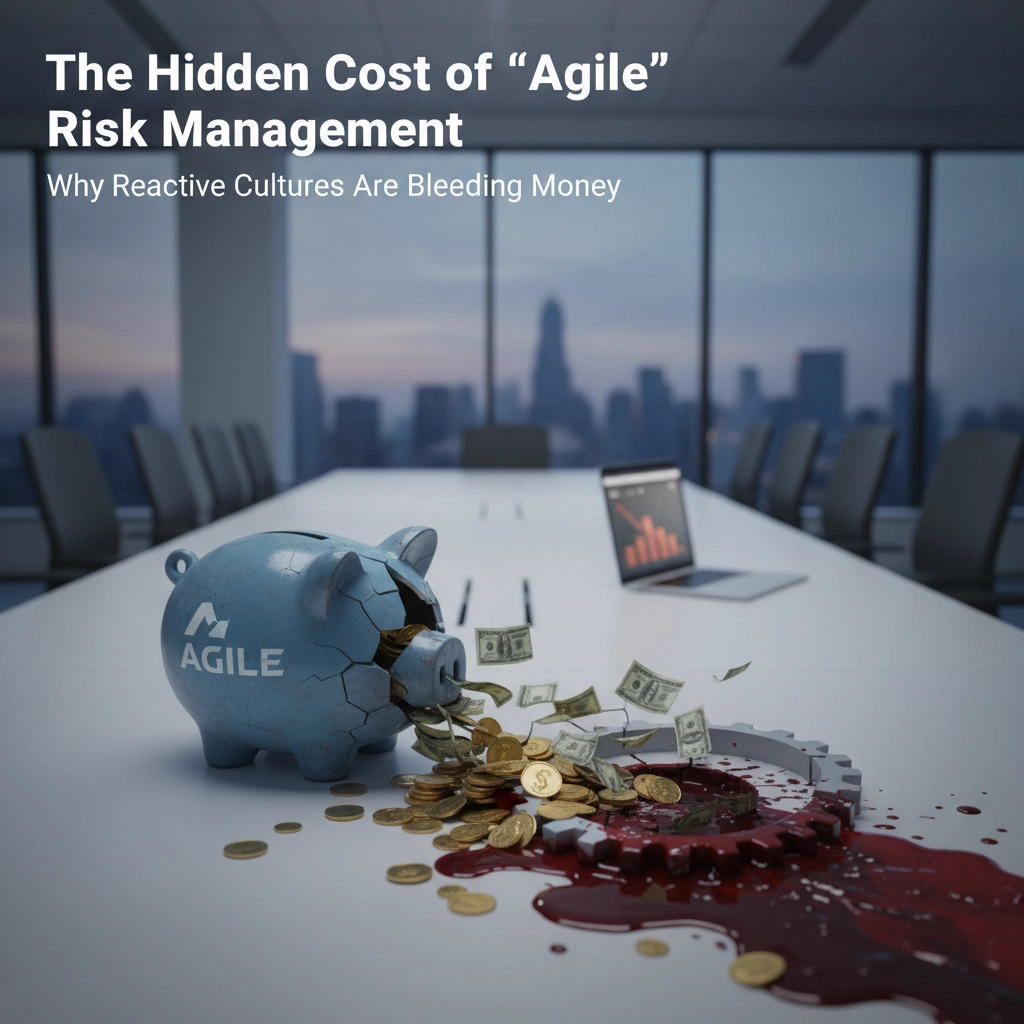
The Hidden Cost of “Agile” Risk Management: Why Reactive Cultures Are Bleeding Money

heroImage

Think your “agile” risk management is keeping you competitive? Think again.

You’re probably bleeding money right now. And the worst part? You don’t even see it happening.

Here’s the brutal truth: Most CEOs have confused agile principles with reactive panic. They’ve built cultures that chase symptoms instead of solving root causes. The result? A financial hemorrhage disguised as operational efficiency.

The Agile Mask: When Speed Becomes Your Slowest Asset

You’ve heard the pitch a thousand times. “Move fast, break things, iterate quickly.” Sounds revolutionary, right?

Wrong.

85% of companies implementing “agile” risk management are actually creating reactive cultures that cost them 3x more than traditional approaches.

Here’s what’s really happening behind the performance mask:

Your team isn’t agile. They’re in constant crisis mode.

→ Every “urgent” meeting becomes a firefighting session
→ Every decision gets made under artificial pressure
→ Every solution addresses the symptom, not the disease

image_1

Real-World Snapshot: “Code Red” Isn’t a Strategy

When Sam Altman reportedly hit “code red” inside OpenAI to counter Google Gemini and Anthropic’s surge, it looked like decisive leadership. Think again.

Even world-class companies can confuse motion with momentum. The mask fits everywhere.

  • Headlines spike → burn rate spikes faster
  • More launches → more rework, more distraction
  • Activity reads as progress → pipeline slips, morale dips

If OpenAI can get pulled into scramble mode, your org can too. Constant emergency ≠ agility. It’s adrenaline. And adrenaline is expensive.

Translate that into your P&L and talent risk:

  • Cost: Compounded rework, duplication, vendor churn, ballooning contractor spend
  • Time: Decision whiplash, priority churn, slow-noise that kills velocity
  • Talent: Burnout rises, A-players walk, B-players hide, leadership trust erodes

You’re not broken. You’re at opportunity. The shift isn’t “faster.” It’s “root-cause, first-principles, pre-commit frameworks.”

Real agility
→ Pre-mortems and early-warning signals mapped to strategy
→ Fewer, better bets with clear kill criteria
→ Leaders who say “no” more than “now”

Reactive “agile”
→ All-hands fire drills
→ Ship-now patchwork
→ The same issues resurfacing every quarter

Bottom line: prevention compounds. Firefighting depreciates. Your ROI follows.

The Four Hidden Money Drains Killing Your ROI

1. The Technical Debt Avalanche

Your teams are moving so fast they’re building disasters. Every shortcuts creates compound interest you can’t afford.

The Real Cost:

  • Systems that break more often than they work
  • Maintenance budgets that double every quarter
  • Development velocity that actually decreases over time

You thought you were saving money by moving fast. Instead, you’ve created a house of cards that costs exponentially more to maintain.

2. The Transparency Trap

More tracking doesn’t equal better outcomes. It equals micromanagement hell.

When you over-monitor without trust, here’s what happens:

  • Teams spend more time defending decisions than making them
  • Risk-aversion replaces innovation
  • Psychological safety disappears overnight

The bottom line? Your people stop taking the calculated risks that drive growth. They hide behind process instead of pushing boundaries.

3. The Rework Spiral

Reactive cultures generate endless loops of fixing yesterday’s “solutions.”

The pattern:

  1. Problem surfaces → Immediate patch applied
  2. Patch creates new problems → Emergency fix deployed
  3. Fix destabilizes other systems → All hands on deck
  4. Repeat infinitely

Companies stuck in rework spirals waste an average of 40% of their development budget on fixing what should have been done right the first time.

4. The Innovation Paralysis

Here’s the contradiction nobody talks about: Reactive agile cultures actually kill innovation.

When everything is urgent, nothing is strategic. When every decision is a crisis, breakthrough thinking dies.

Your most creative leaders become full-time firefighters. Your competitive advantage evaporates while you’re busy putting out fires.

The Root Cause: You’re Treating Symptoms, Not Systems

The real problem isn’t agile methodology. It’s the reactive mindset that hijacked your implementation.

True agile risk management looks like this:

  • Proactive identification of systemic vulnerabilities
  • Strategic response frameworks built before crises hit
  • Root-cause analysis that prevents future occurrences

Reactive “agile” looks like this:

  • Constant emergency meetings about the latest crisis
  • Band-aid solutions applied under pressure
  • The same problems recycling every quarter
image_2

The Million-Dollar Question: Are You Managing Risk or Just Managing Chaos?

Here’s how to tell the difference:

If your risk management is truly strategic, you can answer these questions:

  1. What are the top 3 systemic vulnerabilities that could destroy your business in the next 18 months?
  2. How much money are you losing each quarter to repeated problem-solving cycles?
  3. When did your team last identify and prevent a major risk before it became a crisis?

Can’t answer immediately? You’re in reactive mode.

The Performance Recovery Framework: From Reactive to Strategic

Phase 1: Stop the Bleeding

Immediate Actions:

  • Audit your last 10 “urgent” decisions
  • Calculate the true cost of rework in your organization
  • Identify which problems keep recycling

Phase 2: Build Predictive Intelligence

Strategic Shifts:

  • Map systemic vulnerabilities before they surface
  • Create decision frameworks that work under pressure
  • Establish psychological safety protocols that encourage early problem identification

Phase 3: Design Anti-Fragile Systems

Long-term Advantage:

  • Build processes that get stronger under stress
  • Create learning loops that prevent problem recurrence
  • Develop leadership capacity that thrives in uncertainty
image_3

The Real Agile Advantage: Systems That Think Ahead

Companies that master strategic risk management don’t just survive disruption: they use it as competitive fuel.

The difference is profound:

Reactive cultures ask: “How do we fix this faster?”
Strategic cultures ask: “How do we ensure this never happens again?”

Reactive cultures measure: Speed of response
Strategic cultures measure: Quality of prevention

Reactive cultures reward: Heroic firefighting
Strategic cultures reward: Systematic thinking

Your Critical Decision Point

You’re at a crossroads.

You can keep running the reactive hamster wheel, burning cash and talent while pretending it’s agility.

Or you can step into true strategic risk management that actually accelerates your business while reducing costs.

The companies that make this transition see immediate results:

  • 60% reduction in crisis management time
  • 40% improvement in decision quality under pressure
  • 300% increase in proactive problem identification

But here’s the catch: This transformation requires leadership that can think beyond the next quarterly crisis.

The Executive Innovation Imperative

The old playbook is dead. Reactive management disguised as agility will bankrupt you: slowly, then suddenly.

The leaders who win the next decade will be those who can distinguish between speed and panic, between agility and chaos, between innovation and firefighting.

Ready to stop bleeding money and start building anti-fragile competitive advantage?


Exclusive Opportunity for Executive Leaders:

Invite-only for CEOs, founders, and executive leadership: apply for a complimentary ticket to Dr. Diane Dye’s CEO Innovation Masterclass if you’re ready to transform your approach to strategic risk and innovation management.

This isn’t another workshop. It’s an intensive peer-group experience designed specifically for leaders who want to move beyond reactive management into systematic competitive advantage.

Application is by invitation only and restricted to top leadership roles. Application is for top leadership only.

If you’re ready to stop managing chaos and start building anti-fragile systems, apply for a complimentary ticket to Dr. Diane Dye’s CEO Innovation Masterclass at: https://prc-training-center.peopleriskconsulting.com/masterclass

Seats are limited. Applications are reviewed individually. CEO and founder-level leadership only.

The question isn’t whether you can afford to join. The question is whether you can afford to keep bleeding money while your competitors build systematic advantages.

Apply now. Transform your approach. Lead your industry.

Why Psychological Safety is the Missing Piece in AI Strategy (and How It Impacts ROI)

heroImage

Think your AI strategy is failing because of technology problems?

Think again.

You’re not looking at a tech breakdown. You’re staring at a psychological safety crisis that’s costing you millions in unrealized ROI.

Here’s the brutal truth most CEOs won’t admit: 76% of organizations see engagement skyrocket when they nail psychological safety in AI implementation. But here’s what’s really happening in your company right now.

The $2M Mistake Hidden in Plain Sight

Your people are terrified. And that terror is strangling your AI investment.

You spent millions on the latest AI tools. You hired consultants. You ran training sessions. But your adoption rates are still garbage, and you can’t figure out why.

The real culprit? Your team is operating in survival mode.

When employees hear “AI implementation,” their brains immediately jump to: “Am I about to be replaced?”

This isn’t resistance to change. This is neurobiological threat response. And no amount of change management workshops can override basic human survival instincts.

image_1

The Psychology Behind the Breakdown

Let me unmask what’s really happening in your organization:

Surface behavior: Slow AI adoption, reluctance to experiment, “forgetting” to use new tools.

Underlying problem: Psychological threat state triggered by existential fear.

Your high performers: the ones you need experimenting with AI most: are the ones feeling most threatened. They’re not lazy. They’re not resistant to innovation.

They’re smart enough to recognize a potential career threat.

And until you address this psychological reality, your AI strategy will continue bleeding money.

The ROI Connection You’re Missing

Organizations that crack the psychological safety code in AI implementation see:

  • 76% increase in employee engagement
  • 27% drop in attrition rates
  • 95% skill development participation when AI tools are introduced with human oversight

But here’s the kicker: these aren’t just feel-good metrics. These numbers translate directly to bottom-line performance.

Higher engagement = faster AI adoption

Lower turnover = retained institutional knowledge during AI transition

Skill development participation = competitive advantage in AI-human collaboration

You’re not just implementing technology. You’re orchestrating a fundamental shift in how humans and machines work together. And that requires psychological safety as your foundation.

The Three Fatal Flaws in Traditional AI Strategy

Flaw #1: Technology-First Thinking

You bought the tools before you built the trust.

Most AI strategies start with: “What technology do we need?”

The breakthrough question is: “How do we create an environment where humans feel safe experimenting with AI?”

Real talk: Your team won’t adopt what they don’t trust. Period.

Flaw #2: Generic Change Management

Standard change management treats AI adoption like any other process improvement.

This is not a process change. This is an identity threat.

When you ask someone to work alongside AI, you’re asking them to redefine their professional identity. That requires different psychological preparation than rolling out a new CRM system.

image_2

Flaw #3: Ignoring the Collaboration Imperative

AI excels at pattern recognition and data processing. Humans excel at context, creativity, and ethical judgment.

The magic happens in the collaboration. But collaboration requires trust. Trust requires psychological safety.

Without psychological safety, you get humans vs. AI instead of humans + AI.

The Breakthrough Framework: Building AI-Ready Psychological Safety

Step 1: Transparent AI Communication

Stop treating AI implementation like classified information.

Your people need to know:

  • Exactly how AI will be used in their role
  • What decisions AI will make vs. human decisions
  • How their data is being processed
  • What “success” looks like for human-AI collaboration

Transparency converts uncertainty into manageable knowledge.

Step 2: Reframe Threat as Opportunity

Instead of: “We’re implementing AI to increase efficiency.”

Try: “We’re implementing AI to eliminate the work you hate so you can focus on the work you love.”

This isn’t spin. This is strategic reframing that addresses the psychological reality of change.

Step 3: Create Experimentation Spaces

Give your team permission to experiment without consequences.

Set up “AI learning labs” where people can:

  • Test tools without performance pressure
  • Share failures without judgment
  • Collaborate on identifying best use cases
  • Develop human-AI workflows together

Innovation requires experimentation. Experimentation requires psychological safety.

image_3

The Neuroscience of AI Adoption

Here’s what happens in your employee’s brain when you announce AI implementation without psychological safety:

Amygdala activation → Threat detection mode → Cognitive resources diverted to survival → Learning and creativity shut down

But when psychological safety exists:

Prefrontal cortex engagement → Curiosity and problem-solving mode → Creative collaboration → Accelerated learning and adoption

You’re not just managing change. You’re managing neurobiology.

The Hidden Cost of Getting This Wrong

Poor AI implementation without psychological safety doesn’t just slow adoption.

It destroys organizational culture.

Your team starts seeing:

  • AI as surveillance rather than support
  • Automation as replacement rather than enhancement
  • Leadership as threat rather than ally

These perceptions create cultural damage that takes years to repair. And they make future innovation initiatives nearly impossible.

The Competitive Advantage Waiting for You

Organizations that master psychological safety in AI strategy don’t just see better adoption rates.

They become AI-native cultures.

Their people actively seek ways to improve human-AI collaboration. They identify new use cases. They become internal advocates for innovation rather than obstacles to it.

This is your critical opportunity.

While your competitors struggle with resistance and slow adoption, you can build an organization that thrives on human-AI collaboration.

But only if you address the psychological foundation first.

Your Next Move

You have two choices:

Option 1: Keep throwing technology solutions at what is fundamentally a human problem. Watch your AI investments continue underperforming while your team operates in survival mode.

Option 2: Build psychological safety as the foundation for your AI strategy. Create an environment where humans and AI collaborate to achieve breakthrough results.

The organizations winning with AI aren’t the ones with the best technology.

They’re the ones with the best human-AI collaboration culture.

And that starts with psychological safety.


Ready to transform your AI strategy from the inside out?

I’m accepting applications for an exclusive CEO Innovation Masterclass where we dive deep into the psychology of organizational transformation and breakthrough AI implementation strategies.

This masterclass is by invitation only: exclusively for CEOs, founders, and executive leadership.

We’ll explore the frameworks that turn AI implementation from a threat into your competitive advantage. Including the psychological safety principles that deliver measurable ROI.

Apply for your complimentary ticket here

Applications are reviewed exclusively for C-suite executives and founders only. Seats are limited to maintain the intimate, peer-to-peer learning environment that drives breakthrough results.

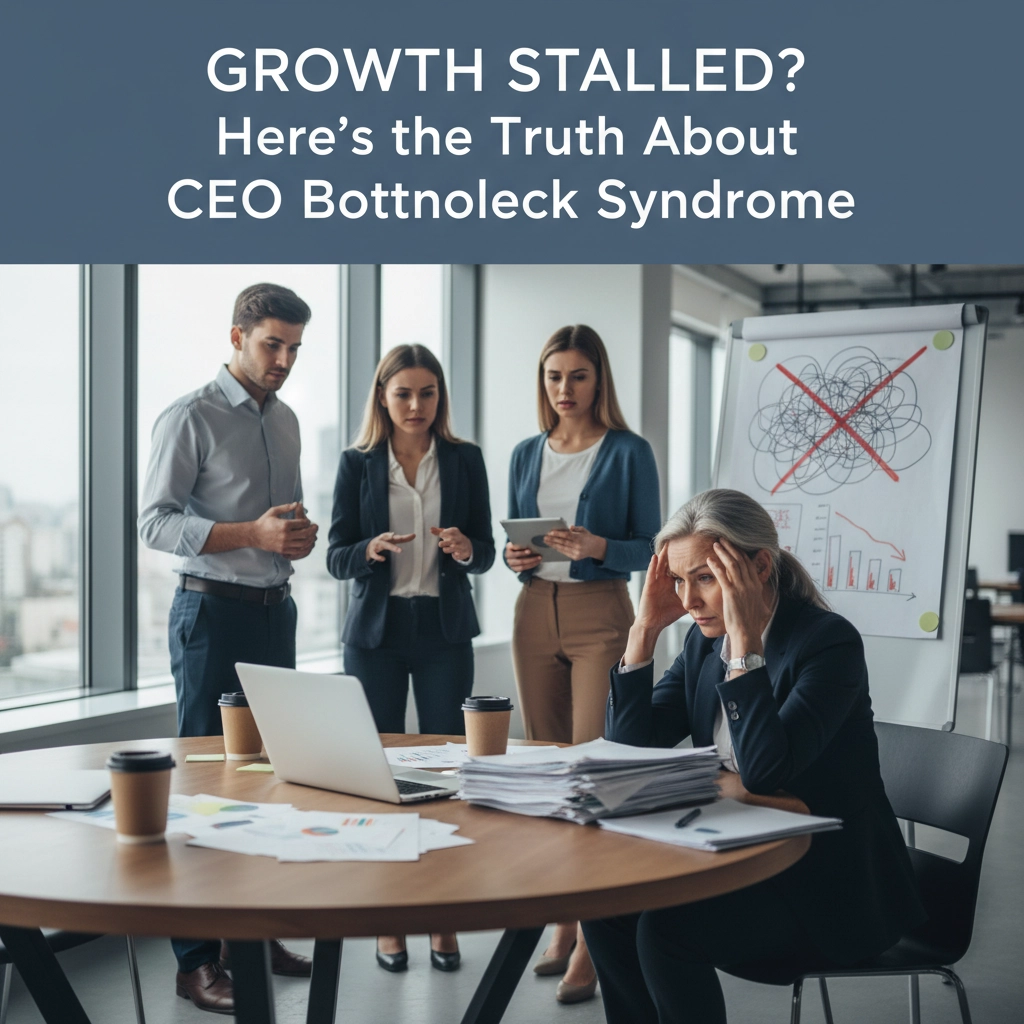
Growth Stalled? Here’s the Truth About CEO Bottleneck Syndrome

heroImage

Think your team isn’t stepping up? Think your market is too crowded? Think another system will fix it?

Think again.

Real talk: You’re the bottleneck. Not your team. Not the economy. Not the competition. You.

Welcome to CEO Bottleneck Syndrome. The silent growth killer that shows up while you work harder than ever.

Take off the founder-hero mask. Look at the system. Look at the throughput. Look at you.

The Reveal: You’re the Ceiling (And That’s Fixable)

Here’s what’s actually happening:

Every decision routes through you → Your team waits → Cycle time expands → Momentum dies → You become the constraint.

67% of scaling failures trace back to leadership bottlenecks, not market conditions.

You built this. You know every detail. You can do it faster, cleaner, better. That expertise became your prison.

The mindset that got you here? “I’ll do it right.” The mindset that gets you there? “I’ll build the system that does it right.”

You’re not broken. You’re at opportunity.

image_1

The 7 Signals You’re Strangling Growth

1) Everything needs your signature.
Routine approvals pile up → Work stalls → Accountability blurs.

2) You’re busy, but the business isn’t moving.
Checklist wins → Firefighting loops → Revenue plateaus.

3) Your calendar owns you.
Back-to-back meetings → No deep work → No strategy.

4) You don’t trust your team to lead.
You hired smart people → You won’t empower them → Dependency grows.

5) You’re in every conversation.
Slack, email, meetings → You’re the commentary track → Noise over signal.

6) You fear “your way” disappearing.
You protect the past → You block the new → Innovation suffocates.

7) The company can’t run without you.
Take 30 days off → Fragility is exposed → The truth is loud.

You’re not the villain. You’re the system. And systems can be redesigned.

The Hidden Cost: The Decision Latency Tax

Decision latency compounds like interest.

Everything flows through you → Decisions slow → Opportunities age out → Competitors move first → Revenue caps hard.

Your best people opt out.
A-players won’t sit on the bench → They want outcomes, not permission → You lose your bench strength.

Fear creates noise.
No decision rights → Confusion → Learned helplessness → Innovation dies.

image_2

Companies with CEO bottlenecks grow 43% slower than those with distributed leadership models.

The math is simple: You can’t scale beyond what one person can manage. If everything depends on you, you’re the ceiling.

Ready to remove the tax? Apply Now → Seats are limited.

The Liberation Playbook: 5 Moves to Break Your Bottleneck

Step 1: Redesign Your CEO Role (Builder, Not Operator)

Your job is five things:
Vision — Where are we going?
Cash — Fuel to get there.
People — Who’s on the field.
Key Relationships — Partners that accelerate.
Learning — Staying ahead of the curve.

Everything else? Strategy theft.
If you’re approving ads or expenses → You’re in the weeds → You’re capping growth.

Step 2: Delegate Authority, Not Tasks

Stop “do it my way.” Start “own the outcome.”

The difference:
• Task: “Send this email by 3 PM.”
• Authority: “Own pipeline velocity this quarter.”

Hire specialists → Give real decision rights → Be the least knowledgeable person in the room on their craft.

Step 3: Install Decision Architecture

Decisions should move without you.

Use RACI:
Responsible — Does the work.
Accountable — Owns the result.
Consulted — Input before the call.
Informed — Updates after the call.

Map recurring decisions → Assign ownership → Remove yourself from the default path.

image_3

Step 4: Buy Back Your Time (Leverage Pays)

Add admin and management layers → Yes, cost rises → But CEO time shifts to growth levers.

The math: If your hour is $500 → 10 hours/week on $50 work → You burn $4,500/week in opportunity.
That’s not frugality. That’s drag.

Step 5: Unmask Your Blind Spots

Ask the questions high-performers avoid:
• Are people afraid to decide without me?
• Do they tell me when I’m wrong?
• Am I coaching leaders or micromanaging?
• What insecurity am I projecting?

Brutal truth: The constraint is internal.
Better truth: Constraints are design prompts.

Run this playbook with us in cohort. Apply Now → Limited seats.

Receipts: What Happens When You Remove the Bottleneck

“60 days after I got out of pricing, margin lifted 28%. Six months later, we added $4.2M in revenue.” — COO, multi‑unit healthcare

“In 90 days we cut decision time by 72% and unlocked a stalled $1.8M product line.” — CEO, B2B services

Breakdowns aren’t failure. They’re data. Bottlenecks aren’t shame. They’re design opportunities.

The Transformation: From Hero to Builder of Builders

Your job has evolved. Stop being the hero. Build the team that doesn’t need one.

Your greatest strength—hands-on excellence—became your current weakness.
Your next strength is systems, trust, and speed.

Remove the constraint. Unlock the throughput. Scale the impact.

image_4

You’re not alone. And you’re not stuck.
You’re at the edge of your next level.

The question isn’t if you can afford to change. It’s if you can afford not to.


Transform from bottleneck to breakthrough leader. Learn the frameworks to scale without losing control at our executive leadership masterclass.

Registration is open. Seats are limited. Your growth won’t wait.

CEOs, founders, and executive leaders only—apply for a complimentary ticket to Dr. Diane Dye’s CEO Innovation Masterclass. Apply Now → Applications are open exclusively to top leadership. Limited complimentary seats.

The Revenue Stages of a Company Are a Lot Like Child Development

Why Your Company Behaves Exactly Like a Growing Child

If you’re feeling frustrated, your company may simply be acting its age.

As a CEO, you’re not just scaling revenue. You’re raising an organization through predictable developmental stages.

And just like children, each phase comes with behaviors, breakthroughs, and breakdowns.

Here’s what I see inside companies every day:


0 to 1M: The Infant Stage

Behavior:

  • Needs constant care
  • Survives on founder energy
  • Every system is manual
  • Everything feels fragile

Leadership Requirement:

You carry the whole thing. You are the lifeline, the nourishment, the safety.


1M to 3M: The Toddler Stage

Behavior:

  • Takes first independent steps
  • Wanders, experiments, touches everything
  • Creates chaos but surprises you with brilliance
  • “No” becomes a theme from customers, team, and systems

Leadership Requirement:

Guardrails. Structure. Consistency.

You can’t baby it anymore, but it’s not ready to self-regulate either.


3M to 10M: The Childhood Stage

Behavior:

  • Curious, growing quickly
  • More voices and opinions that still lack alignment
  • Complexity ramps up fast
  • Needs predictability and rhythm to feel safe

Leadership Requirement:

Culture imprints here.

Your company absorbs what you model, not what you say.


10M to 25M: The Preteen Stage

Behavior:

  • Identity confusion
  • Pushback on rules
  • Wants freedom but can’t fully handle it
  • Growth spurts followed by awkward stalls

Leadership Requirement:

You must evolve before the company can.

Alignment, communication, and recalibration are essential.


25M to 50M: The Teenage Stage

Behavior:

  • Strong opinions
  • Desire for autonomy
  • Bold moves and equally bold mistakes
  • Constant boundary testing
  • Rising pressure to perform

Leadership Requirement:

Clear, steady leadership.

Empowerment with accountability.

This is where many CEOs start masking instead of leading.


50M to 100M and beyond: The Young Adult Stage

Behavior:

  • Ready for bigger rooms but still needs direction
  • Capable of major breakthroughs
  • Can scale quickly or collapse under pressure
  • Needs systems, communication pathways, and real governance

Leadership Requirement:

Mature decision making, experimentation, and strategic depth.

This is the shift from firefighting to architecting.


What It Really Means When Your Company Feels “Off”

If your company feels “off,” it may be acting its age while you expect it to act older.

The mismatch is the real friction.

If you want clarity on your next stage of growth, I can help you find it.

Be Willing to Unlearn What You Think You Know: Why Modern Leaders Must Release Old Assumptions to Grow

By Dr. Diane Dye

In almost every executive room I facilitate, there comes a moment when a leader who is brilliant, experienced, and deeply successful hits an invisible ceiling. Not because they lack knowledge. But because the knowledge they’re relying on is built for a version of their business that no longer exists.

That’s when I offer to share a line that has become central to my teaching:

“Be willing to unlearn what you think you know.” — Dr. Diane Dye

This idea is not new. But considering our growing need for agility and innovation it is newly urgent.

While this phrasing reflects how I teach the principle, the concept of unlearning is rooted in well-established leadership and philosophical traditions. Understanding those roots helps leaders see just how essential, timeless, and necessary this practice really is.

Where the Idea Comes From: A Brief Look at the Foundations of Unlearning

Alvin Toffler and the Future of Adaptability

The futurist Alvin Toffler predicted the modern dilemma in Future Shock (1970). His famous line still echoes through leadership circles:

“The illiterate of the 21st century will not be those who cannot read and write, but those who cannot learn, unlearn, and relearn.”

Toffler understood that the pace of change would outstrip even the sharpest intellects unless leaders were willing to release outdated models. He wasn’t talking about forgetting. He was talking about making space for better information.

The world we operate in today is exactly the world he warned us about.

Zen Philosophy and the Power of Beginner’s Mind

Long before innovation labs and executive training existed, Zen philosophy taught Shoshin which is the concept of “beginner’s mind.”

Beginner’s mind is the willingness to approach a situation:

  • without ego
  • without assumptions
  • without the weight of past experience

It’s openness. Curiosity. Flexibility.

It’s the opposite of the rigid certainty that keeps leaders stuck.

How My Teaching Fits Into This Tradition

My phrase “Be willing to unlearn what you think you know” is simply a practical, modern expression of these timeless ideas:

  • Toffler’s insistence on adaptability
  • Zen’s call for openness
  • The real-world pressure leaders face when strategies that once worked suddenly stop producing results

It’s a bridge between theory and the day-to-day reality of executive decision-making.

Why Unlearning Is the Hidden Superpower of Today’s Leaders

Unlearning is not abandonment.

It’s evolution.

High-performing leaders often struggle not because they lack skills but because:

  • They’re anchored to old models
  • Their early strategies have become limitations
  • Their success created blind spots
  • Their identity is tied to outdated ways of operating

Unlearning is the process of loosening the grip on “what used to be true.”

Here’s how I teach it:

Unlearning is updating.

When the landscape shifts, your assumptions must shift with it.

Unlearning protects your legacy.

It ensures your past success doesn’t become the reason you stall.

Unlearning creates fresh capacity.

You can’t innovate on a full hard drive.

Unlearning restores perspective.

It reopens doors that certainty quietly closed.

The Leaders Who Grow Fastest Share This One Trait

They remain students.

They don’t cling to what made them successful. They stay curious, experimental, inwardly honest, and outwardly adaptable.

They embody both Toffler’s insight and the spirit of beginner’s mind, even when they’ve built companies worth tens or hundreds of millions.

The leaders who thrive are those who are willing to say:

“What if I’m wrong? And what else could be possible?”

That question alone can unlock years of stalled growth.

A Closing Thought

The world doesn’t reward the most knowledgeable leaders anymore.

It rewards the most adaptable.

Whether you draw from Toffler, Zen philosophy, or modern executive tools, the truth remains:

Your next breakthrough rarely requires more information.It requires the courage to release the assumptions holding you back.

And that begins with the willingness and humility to unlearn what you think you know.

The Swift-Kelce Engagement: What CEOs Can Learn About Strategic Partnerships

On August 26, 2025, Taylor Swift and Travis Kelce announced their engagement in a joint Instagram post:
“Your English teacher and your gym teacher are getting married.” Let me tell you, as a pretty much since pigtails (oh who am I kidding – I still rock pigtails) girl, I’ve been a Swiftie. And this news has me over the moon. But as an expert in organizational resilience who loves M&A, its brain candy for me.

At first glance, this might look like a celebrity headline. But if you’re leading a company and considering a merger or major strategic partnership, you’d be wise to look deeper.

Why? Because this “deal” is now the most financially successful partnership in modern entertainment and sports history—valued at $1.7 billion. And the principles behind its success are the same ones that determine whether your merger thrives or fails.


Why This Partnership Works

Complementary Market Positioning
Swift brought a $1.6 billion global entertainment empire, while Kelce contributed NFL credibility and access to an $18 billion industry. Rather than competing for the same audience, they expanded into new, complementary markets.

McKinsey research reinforces this: mergers succeed when they protect core business momentum while unlocking new revenue streams. Swift kept touring at record-breaking levels, Kelce kept winning Super Bowls, and together they unlocked new fan segments (female NFL viewership grew 53%).

Cultural Compatibility
Up to 80% of corporate mergers fail due to cultural mismatch. This is where Swift and Kelce excelled. Both emphasize authenticity, family-friendly images, and community engagement. Their compatibility created trust and longevity.

Authentic Narrative
Audiences (and customers) can smell forced partnerships. From friendship bracelets to Kelce’s jersey sales spiking 400%, this relationship was rooted in authenticity. That authenticity created exponential engagement—1.2 million Instagram likes in 10 minutes on their engagement announcement.


What This Means for CEOs Considering M&A

The Swift-Kelce case validates three insights every executive should apply:

  1. Look for Complementary Strengths, Not Redundancy
    If you’re evaluating a merger, ask:
  • Does this partner give us access to markets we can’t reach alone?
  • Are we duplicating capabilities or expanding them?
  1. Prioritize Cultural Due Diligence
    The financial model might work on paper, but culture is what drives long-term success. Assess:
  • Do our leadership teams share values?
  • Will employees feel energized or alienated by the merger?
  • Are customer experiences aligned?
  1. Anchor the Partnership in an Authentic Narrative
    Whether you’re merging companies or entering a strategic alliance, the story you tell matters. Stakeholders—employees, investors, customers—need to believe in the why behind the deal.

Action Steps for Executives

Before moving forward with a merger or major partnership:

  • Conduct Complementarity Analysis
    Map both organizations’ markets, audiences, and assets. Look for expansion opportunities, not overlap.
  • Run a Cultural Integration Assessment
    Interview cross-level employees, review decision-making styles, and evaluate leadership approaches. Research shows culture-driven failures outpace financial-driven ones in M&A.
  • Stress-Test the Narrative
    Craft the “why now, why us, why this” story. Test it with trusted insiders. If it doesn’t inspire confidence internally, it won’t land externally.
  • Protect Core Momentum
    Don’t bet the farm on synergies. Like Swift and Kelce, keep the base business thriving while integration unfolds.

Final Thought

The Swift-Kelce engagement is more than a celebrity milestone—it’s real-world validation of modern M&A theory. For CEOs, the lesson is clear:

  • Complementary markets expand value.
  • Cultural compatibility ensures durability.
  • Authentic narratives drive stakeholder buy-in.

Partnerships built on these three pillars don’t just grow—they transform industries.


If you’re weighing a merger or partnership, don’t go it alone. The right strategic lens can help you spot hidden risks, evaluate cultural fit, and turn opportunity into sustainable advantage. Connect with People Risk Consulting for help. We even have a very accessible on-demand level open now. You know you vibe with us if you love travel, culture, music, pop culture, and learning outside of the board room. We can trade friendship bracelets.

When Luxury Meets Reality: How LVMH’s Labor Crisis Exposes Modern Business Vulnerabilities

The luxury fashion industry has always been built on exclusivity, craftsmanship, and premium positioning. But beneath the glossy surface of €3,000 handbags and €5,000 cashmere jackets lies a reality that’s forcing executives across industries to reconsider fundamental questions about business practices, reputation management, and operational risk.

LVMH’s ongoing labor exploitation crisis in Italy offers a masterclass in how seemingly distant supply chain decisions can rapidly escalate into existential business threats. With two subsidiaries—Dior and Loro Piana—placed under court administration within 13 months, the world’s largest luxury conglomerate has seen its market value decline 22% while ceding its position as the most valuable luxury company to Hermès.

The story isn’t just about fashion. It’s about how modern business practices, regulatory evolution, and stakeholder expectations are colliding to create new categories of enterprise risk that traditional management approaches struggle to address.

The Anatomy of Modern Business Vulnerability

What makes LVMH’s crisis particularly instructive is how it reveals the hidden risks embedded in common business practices. The company’s Italian operations relied on a multi-layered outsourcing model that many industries would recognize: primary contractors who subcontract to specialized facilities, creating cost advantages through competitive bidding and operational flexibility.

On paper, this approach delivered exactly what executives wanted: handbags produced for €53 that could retail for €2,600, generating profit margins exceeding 4,800%. The outsourcing structure provided legal distance from manufacturing operations while maintaining cost efficiency that enabled luxury pricing strategies.

But this same structure created what risk management experts now call “systemic opacity”—organizational blind spots that amplified rather than mitigated operational risks. When Milan prosecutors investigated, they found workers sleeping in factories for “24-hour availability,” safety equipment removed to increase productivity, and wages as low as €2-3 per hour in facilities producing premium luxury goods.

The revelations forced uncomfortable questions: How much operational control can companies surrender while maintaining accountability for outcomes? And more fundamentally: What constitutes acceptable distance between brand values and production realities?

Reputation in the Age of Transparency

LVMH’s experience illustrates how reputational risk has evolved from episodic crisis management to continuous stakeholder relationship management. The luxury sector has historically operated on brand mystique—the less consumers knew about production realities, the more they could project aspirational values onto premium products.

That dynamic is fundamentally changing. Social media amplification, investigative journalism, and regulatory transparency requirements have created what scholars call “radical accountability”—environments where operational decisions across global supply chains can rapidly become public brand liabilities.

The financial impact has been immediate and measurable. LVMH’s first-half 2025 results showed net profit declining 22% and Fashion & Leather Goods sales falling 9%, with management specifically citing “labor scandals” as a key performance factor alongside economic headwinds.

But beyond immediate financial metrics, the crisis has damaged something more valuable: the aspirational premium that justifies luxury pricing. Consumer forums reveal deep disillusionment with the disconnect between premium pricing and production realities. When Loro Piana customers discover their €5,000 jackets were produced under exploitative conditions for €118, the entire value proposition becomes questionable.

The lesson extends well beyond luxury goods: In interconnected markets, operational practices anywhere in your value chain can rapidly become brand positioning everywhere in your market.

Risk Management’s Evolution

Traditional enterprise risk management focused on direct operational risks—supply disruptions, quality failures, regulatory compliance within your immediate operations. LVMH’s crisis demonstrates how this approach has become inadequate for modern business complexity.

The company conducted 4,066 audits on 3,690 suppliers in 2024, implementing extensive monitoring systems and compliance programs. Yet systematic labor exploitation continued across multiple subsidiaries, suggesting that conventional audit-based risk management may be structurally insufficient for complex global operations.

The problem isn’t execution—it’s conceptual. When you design business models around cost optimization through operational distance, traditional risk management becomes reactive rather than preventive. You’re essentially auditing your way around fundamental structural vulnerabilities rather than addressing root causes.

Modern risk management requires rethinking the relationship between business model design and stakeholder accountability. Companies can no longer treat supply chain partners as arm’s-length vendors whose practices don’t reflect corporate values. Every outsourcing decision is now a brand positioning decision.

The Change Imperative

LVMH’s response reveals both the scope of required change and the difficulties in implementing it. The company has committed to accelerated vertical integration across multiple brands, enhanced supplier monitoring systems, and new compliance frameworks. But these changes require fundamental operational restructuring that will pressure profit margins while regulatory penalties await companies that delay reform.

The broader challenge is that incremental improvements to existing models may be insufficient. The EU’s Corporate Sustainability Due Diligence Directive, taking effect 2027-2029, requires companies to implement mandatory human rights due diligence across supply chains, with penalties reaching 5% of global revenue for serious breaches.

This represents a fundamental shift from voluntary corporate social responsibility to legally mandated operational accountability. Companies across industries need to evaluate whether their current business models can survive in regulatory environments where supply chain practices carry direct legal and financial liability.

Strategic Implications for Modern Business

LVMH’s crisis offers three critical lessons for executives across industries:

First, competitive advantages built on operational opacity are increasingly unsustainable. Cost advantages achieved through complex outsourcing may create short-term profit margins but long-term reputational and regulatory vulnerabilities that ultimately destroy shareholder value.

Second, stakeholder expectations have fundamentally shifted. Consumers, investors, and regulators increasingly expect alignment between corporate values and operational practices across entire value chains. The days of brand positioning divorced from production realities are ending.

Third, early action on operational ethics creates competitive advantages. While LVMH faces regulatory scrutiny and market share losses, competitors who proactively address supply chain transparency and worker treatment can gain market position and regulatory credibility.

Executive Action Plan: From Crisis to Competitive Advantage

LVMH’s crisis provides a roadmap for proactive leadership. Here’s your 90-day-to-3-year action framework:

Phase 1: Immediate Assessment (0-90 Days)

Supply Chain Reality Check

  • Map complete supplier network—every layer, every subcontractor
  • Calculate operational distance: How many degrees of separation between your brand and actual workers?
  • Identify blind spots: What percentage of your supply chain can you monitor in real-time?
  • Document cost structures: Where do your biggest margins come from and why?

Regulatory Risk Assessment

  • Review incoming regulations: EU due diligence laws, state transparency requirements
  • Calculate financial exposure: Penalties as percentage of revenue, not just dollar amounts
  • Identify liability gaps: Which current practices could become illegal under new frameworks?
  • Benchmark competitor vulnerabilities: Who else is exposed and how are they responding?

Brand Position Stress Test

  • Compare public values with documented supplier practices
  • Run transparency scenarios: How would customers react to full operational disclosure?
  • Quantify reputation risk: Current brand premium versus potential reputational damage
  • Test stakeholder reactions: Survey key customers, investors, employees on operational priorities

Phase 2: Strategic Restructuring (3-12 Months)

Redesign Supplier Architecture

  • Shift from cost-only to values-aligned supplier selection
  • Replace audit-based monitoring with direct operational oversight
  • Launch supplier development programs focused on practice improvement
  • Establish supplier scorecard including labor, environmental, and governance metrics

Integrate ESG into Business Operations

  • Link supply chain accountability to executive compensation
  • Create cross-functional teams: procurement + legal + brand + risk management
  • Build early warning systems for regulatory and reputational threats
  • Establish monthly executive reviews of operational vs. brand alignment

Build Proactive Communication Systems

  • Develop transparency-first communication strategies
  • Create regular stakeholder reporting on operational improvements
  • Establish crisis protocols emphasizing accountability over deflection
  • Train leadership team on integrated stakeholder management

Phase 3: Long-Term Competitive Positioning (1-3 Years)

Business Model Evolution

  • Evaluate outsourcing sustainability under emerging regulatory frameworks
  • Consider strategic vertical integration where brand reputation requires operational control
  • Design competitive strategies using transparency as market differentiator
  • Restructure profit models to account for true cost of responsible operations

Industry Leadership Development

  • Position company as operational practice standard-setter
  • Use accountability as premium positioning tool
  • Build regulatory partnerships as solution provider rather than enforcement target
  • Create industry coalitions around best practices

Measurement and Continuous Improvement

  • Establish new KPIs: supplier practice metrics alongside traditional cost/quality measures
  • Monitor regulatory landscape changes and compliance costs across all markets
  • Track brand sentiment specifically related to operational transparency
  • Implement board-level oversight of supply chain and stakeholder risks

The New Business Reality

The luxury industry’s labor exploitation crisis isn’t really about luxury—it’s about how global business practices are adapting to new stakeholder expectations, regulatory requirements, and transparency demands. Companies across industries outsource operations, optimize costs through complex supplier relationships, and maintain brand positions that may not fully reflect operational realities.

The question isn’t whether your industry will face similar scrutiny—it’s whether you’ll be prepared when it arrives. The executives who act proactively on these action steps will create sustainable competitive advantages, while those who wait for regulatory pressure may find themselves managing crisis rather than leading change.

LVMH’s experience suggests that companies who delay addressing these vulnerabilities risk facing regulatory intervention, market share losses, and fundamental business model disruption. But organizations that implement systematic operational alignment with stakeholder values across their entire value chains can turn transparency and accountability from threats into strategic assets.

The luxury industry’s reckoning may be just the beginning. The real question is: What will your leadership response look like?


This analysis draws from extensive reporting on LVMH’s Italian labor crisis, including court documents, regulatory filings, and industry analysis from Business of Fashion, CNN, Fortune, and other sources documenting the systematic nature of luxury supply chain vulnerabilities and regulatory responses.